

Lincoln SquareAndersonvilleWest Ridge
Chicago makes Smart Streets bus and bike lane camera enforcement permanent and citywide
The City Council voted Oct. 14 to turn the Smart Streets camera pilot, due to expire Dec. 21, into a permanent program that will expand across Chicago by 2028.
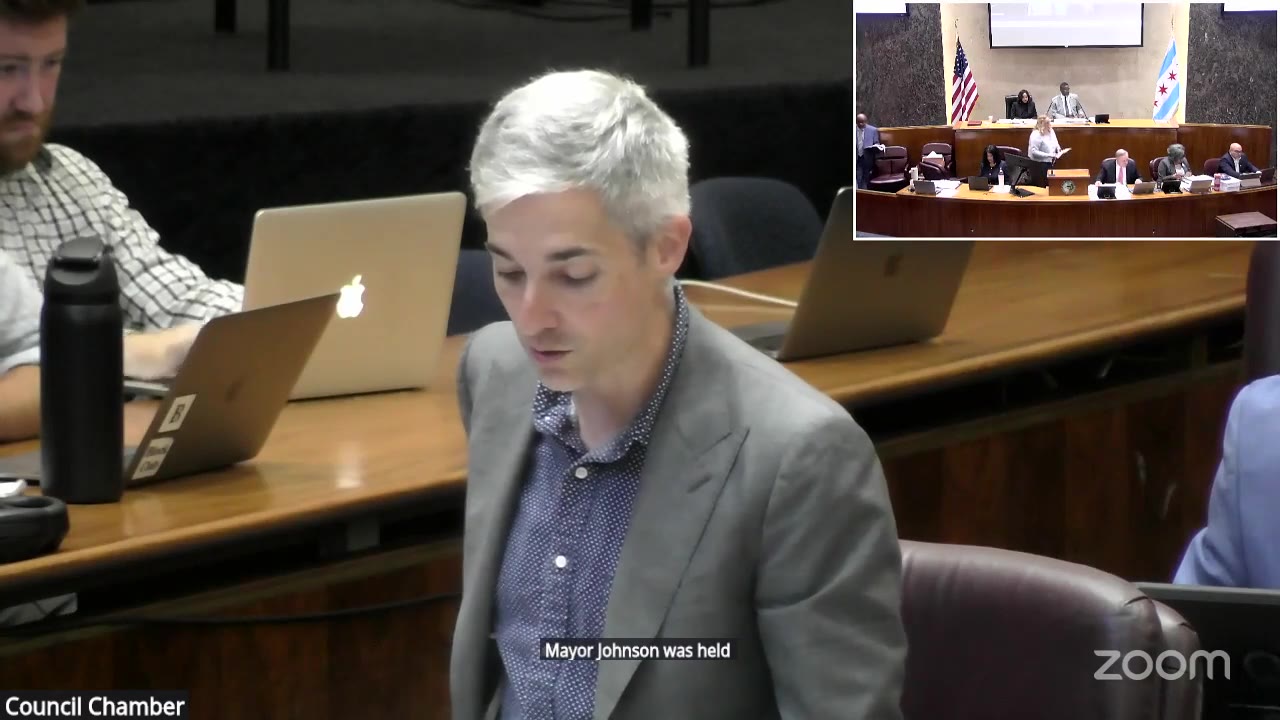
Smart Streets, the camera program that tickets drivers who park or stop in Chicago's bus lanes and bike lanes, will not expire on Dec. 21 after all. On Oct. 14 the City Council voted to make it permanent and to take it citywide.
The ordinance, SO2026-0028833, was introduced on Sept. 23 by Ald. Andre Vasquez Jr. (40th Ward) and Ald. Daniel La Spata (1st Ward), with 28 other alderpersons signed on as co-sponsors. La Spata, who chairs the Committee on Pedestrian and Traffic Safety, told the Council the ordinance "makes the Smart Streets pilot, which is currently set to expire December 21st, a permanent program and expanded citywide."
What does Smart Streets do?
Chapter 9-108 of the Municipal Code set up a pilot in which cameras mounted on CTA buses and City vehicles photograph a vehicle and its plate when it commits a covered offense: using a bus lane, stopping or parking in a bike lane, and a list of other parking and standing violations in the parking code. The registered owner is liable for the fine set in the City's parking code. A first offense draws a warning notice by mail; after that, a ticket.
Until now the chapter applied only inside a pilot area on the North Side and near the Loop, bounded roughly by Irving Park Road, Ashland Avenue and Archer Avenue, 26th Street and Roosevelt Road, and the lakefront. The Council extended the pilot's expiration once before, in July 2024, 50 to 0.
What changes under the new ordinance?
The substitute ordinance the committee adopted on Oct. 9 rewrites the chapter. From the text and our committee notes:
- The pilot area is gone. The boundary definition is struck, and so is the defense that a violation happened outside the pilot area. The expiration section, which would have repealed the whole chapter on Dec. 21, 2026, is removed.
- Cameras can go more places. The definition of an automated parking enforcement system now covers devices on public transit vehicles, City vehicles, vehicles leased or operated under agreement with the City, City property and other locations identified by the Chicago Department of Transportation.
- Rollout is phased. CDOT and the Department of Finance are to set an implementation schedule that prioritizes locations by demonstrated need, traffic and safety conditions, and the concentration of transit and bike infrastructure. Before the first deployment in a ward, the commissioner must notify its alderperson.
- Reports come quarterly. CDOT and Finance must report to the committee at the end of each quarter on traffic safety, emissions, bus operations, cycling and pedestrian mobility, compliance, and ticketing, including how citations fall across population groups and areas and collection rates by plate type.
- Warnings narrow. Our notes say the committee removed the 30-day warning period after a new installation; the first-offense warning stays.
What did the committee hear about cost and rollout?
At the Oct. 9 committee meeting, our notes say CDOT's Chuck Billows laid out three phases: Foster Avenue, California Avenue and Pershing Road in 2027; Devon Avenue, Pulaski Road and 51st Street in 2027; and citywide by 2028. He put the cost at about $1.9 million for the first phase, $1.5 million for the second and about $4 million for the third, with existing parking enforcement staff driving the camera vehicles. He projected 207,000 additional violations and roughly $9.4 million in gross revenue, about $6.1 million net.
Vasquez questioned the cost of going from 8 camera vehicles to 26 and asked whether putting more resources into CTA buses could expand coverage faster. The CTA's Molly Poppy said the agency strongly supports the program, that violations cut bus speeds by about 5%, and that the CTA can equip up to 100 buses under its contract, at about $2 million to install 52 cameras, funded by the CTA and the regional transit body.
Vasquez recounted the two 2022 bike-lane deaths that led to higher fines and the pilot, and said pilot findings show driver behavior changed; he also raised data-protection concerns about camera footage, including potential law enforcement access. Ald. Brian Hopkins (2nd Ward) argued the program should emphasize compliance over revenue and called for renewed signage so drivers know enforcement will cost them. Ald. Jason Ervin (28th Ward) asked whether warning signage is required near enforced areas.
How did the vote go?
The committee recommended the substitute on a voice vote with no dissent, according to its letter to the Council. On Oct. 14 La Spata moved it by the first roll call of the Finance Committee report, and no one objected. The City Clerk's record shows 49 yes votes, none against, with Ald. Monique Scott (24th Ward) not voting. A motion to reconsider failed.
How each ward voted
49 yea, 1 not voting · Oct 14, 2026 · Passed
 1Daniel La Spata: Yea
 2Brian Hopkins: Yea
 3Pat Dowell: Yea
 4Lamont J. Robinson: Yea
 5Desmon C. Yancy: Yea
 6William E. Hall: Yea
 7Gregory I. Mitchell: Yea
 8Michelle A. Harris: Yea
 9Anthony Beale: Yea
 10Peter Chico: Yea
 11Nicole T. Lee: Yea
 12Julia M. Ramirez: Yea
 13Marty Quinn: Yea
 14Jeylú B. Gutiérrez: Yea
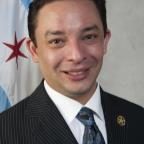 15Raymond A. Lopez: Yea
 16Stephanie D. Coleman: Yea
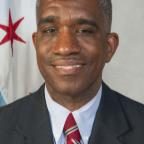 17David H. Moore: Yea
 18Derrick G. Curtis: Yea
 19Matthew J. O'Shea: Yea
 20Jeanette B. Taylor: Yea
 21Ronnie L. Mosley: Yea
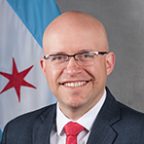 22Michael D. Rodriguez: Yea
 23Silvana Tabares: Yea
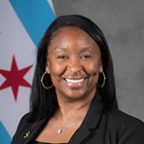 24Monique L. Scott: Not voting
 25Byron Sigcho-López: Yea
 26Jessica L. Fuentes: Yea
 27Walter R. Burnett: Yea
 28Jason C. Ervin: Yea
 29Chris Taliaferro: Yea
 30Ruth Cruz: Yea
 31Felix Cardona Jr.: Yea
 32Scott Waguespack: Yea
 33Rossana Rodríguez Sánchez: Yea
 34William Conway: Yea
 35Anthony J. Quezada: Yea
 36Gilbert Villegas: Yea
 37Emma Mitts: Yea
 38Nicholas Sposato: Yea
 39Samantha Nugent: Yea
 40Andre Vasquez Jr.: Yea
 41Anthony V. Napolitano: Yea
 42Brendan Reilly: Yea
 43Timothy R. Knudsen: Yea
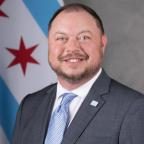 44Bennett R. Lawson: Yea
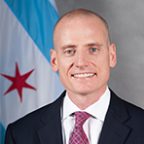 45James M. Gardiner: Yea
 46Angela Clay: Yea
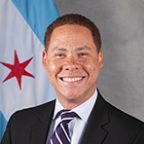 47Matthew J. Martin: Yea
 48Leni Manaa-Hoppenworth: Yea
 49Maria E. Hadden: Yea
 50Debra L. Silverstein: Yea
SO2026-0028833: the roll call, the timeline and the documents
What it means on your block
- If you drive, stopping in a bus lane or bike lane, even briefly, can draw a camera ticket anywhere in the city once the rollout reaches your area. The first offense brings a warning by mail.
- If you ride the bus or bike, the first corridors are Foster, California and Pershing, then Devon, Pulaski and 51st, both in 2027, with the rest of the city by 2028.
- Your alderperson gets notice before the first cameras are deployed in the ward, and the committee gets a report every quarter. Both are places to raise where cameras should, or should not, go.