

The new transit agency can now build near stations, and parking minimums are gone near transit. Here's what the Council already did
NITA has found about 3,000 underused transit parcels and expects to start building in 2029, the Sun-Times reported. On Sheridan Road, a 91-unit building with 38 parking spaces is rising on the Holiday Club site.
The state's new regional transit agency can now buy land, partner with developers and build housing and shops near train and bus lines, powers that the agency it replaced never had, the Chicago Sun-Times reported Monday. The same law also ended most parking-space requirements near transit across the region, which in practice covers nearly all of Chicago.
Why it matters: what gets built near a train station, and how much parking it must include, has mostly been decided by the City Council through zoning. The Northern Illinois Transit Authority (NITA), which now oversees the CTA, Metra and Pace, is becoming a developer in its own right, though it must have a municipality's approval to condemn land, according to the Sun-Times.
Advertisement
What the Sun-Times found
The law that created NITA nearly a year ago lets it form public-private partnerships, take on debt, offer incentives to developers and condemn land with local approval, the Sun-Times reported. An Urban Institute researcher told the paper the powers go further than almost any other U.S. transit agency's because they include development not tied directly to transit.
A NITA planning manager told the Sun-Times the agency has identified about 3,000 underused transit-owned parcels, 91 of them ripe for development and most of them in the suburbs, with room for about 8,500 homes. The law requires NITA to publish its inventory by June 2027. The agency is hiring a development office of about 10 people, expects to take proposals in 2028 and start building in 2029, and plans to put $10 million toward the projects, according to the report.
The law's "People Over Parking" provision eliminates municipal parking minimums within half a mile of a rail station and within one block of bus corridors, the Sun-Times reported. It does not ban parking; it ends the requirement.
Advertisement
A local example: the Holiday Club site
On the North Side, demolition is underway at the former Holiday Club, 4000 N. Sheridan Rd., for a seven-story building with 91 apartments, 38 parking spaces and about 2,000 square feet of retail, Block Club Chicago reported Sunday. The City's Zoning Board of Appeals approved cutting the required parking from 91 spaces to 38 in February 2025 because the site is near transit, according to Block Club. The club closed in May after 25 years.
That project needed a zoning variance to go below the City's parking rules. Under the new state rule, a similar building near transit would not have a parking minimum to go below.
What our records add: how the Council has handled parking near transit
The Council has loosened parking rules near transit several times, each time by wide margins:
Advertisement
- 2022: The Equitable Transit-Oriented Development ordinance (SO2022-2000) passed 36 to 10 under the previous Council, changing the zoning code's rules for development near transit.
- July 16, 2025: Ald. Daniel La Spata's (1st) ordinance (SO2025-0015577) allowing parking minimums near CTA and Metra lines to be cut by up to 100% passed 50 to 0. In committee, La Spata described it as flexibility rather than a mandate, with exclusions for downtown districts and areas near Metra (watch at 2:05:18). Ald. Anthony Quezada (35th) said removing minimums would help build affordable housing near transit (2:08:58).
- Feb. 18, 2026: Ald. Walter Burnett's (27th) ordinance on minimum parking ratios for new construction near CTA and Metra stations (SO2025-0021721) passed 49 to 0.
- Feb. 18, 2026: The Council approved an intergovernmental agreement with the Regional Transportation Authority (O2026-0022516), NITA's predecessor, for a Belmont Blue Line equitable TOD study, 49 to 0.
How each ward voted
49 yea · Jul 16, 2025 · Passed
 1Daniel La Spata: Yea
 2Brian Hopkins: Yea
 3Pat Dowell: Yea
 4Lamont J. Robinson: Yea
 5Desmon C. Yancy: Yea
 6William E. Hall: Yea
 7Gregory I. Mitchell: Yea
 8Michelle A. Harris: Yea
 9Anthony Beale: Yea
 10Peter Chico: Yea
 11Nicole T. Lee: Yea
 12Julia M. Ramirez: Yea
 13Marty Quinn: Yea
 14Jeylú B. Gutiérrez: Yea
 15Raymond A. Lopez: Yea
 16Stephanie D. Coleman: Yea
 17David H. Moore: Yea
 18Derrick G. Curtis: Yea
 19Matthew J. O'Shea: Yea
 20Jeanette B. Taylor: Yea
 21Ronnie L. Mosley: Yea
 22Michael D. Rodriguez: Yea
 23Silvana Tabares: Yea
 24Monique L. Scott: Yea
 25Byron Sigcho-López: Yea
 26Jessica L. Fuentes: Yea
 27Walter R. Burnett: Not in office
 28Jason C. Ervin: Yea
 29Chris Taliaferro: Yea
 30Ruth Cruz: Yea
 31Felix Cardona Jr.: Yea
 32Scott Waguespack: Yea
 33Rossana Rodríguez Sánchez: Yea
 34William Conway: Yea
 35Anthony J. Quezada: Yea
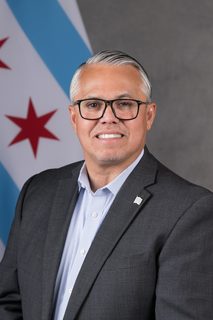 36Gilbert Villegas: Yea
 37Emma Mitts: Yea
 38Nicholas Sposato: Yea
 39Samantha Nugent: Yea
 40Andre Vasquez Jr.: Yea
 41Anthony V. Napolitano: Yea
 42Brendan Reilly: Yea
 43Timothy R. Knudsen: Yea
 44Bennett R. Lawson: Yea
 45James M. Gardiner: Yea
 46Angela Clay: Yea
 47Matthew J. Martin: Yea
 48Leni Manaa-Hoppenworth: Yea
 49Maria E. Hadden: Yea
 50Debra L. Silverstein: Yea
SO2025-0015577: the roll call, the timeline and the documents
The Council's remaining role. NITA needs a municipality's approval before it can condemn land, the Sun-Times reported. Most development near Chicago stations today still comes before the Committee on Zoning, Landmarks and Building Standards, now chaired by Ald. Bennett Lawson (44th), when it needs a zoning change. Our Oct. 24 story on a 52-unit building proposed with seven parking spaces near the Diversey Brown Line shows how those cases reach his committee.
What's next
NITA's list of underused parcels is due by June 2027, and the agency expects to start taking developer proposals in 2028, according to the Sun-Times. The City's Department of Planning and Development testifies at the Council's budget hearings on Nov. 4, where members can ask how the City and NITA will work together on land near stations (hearing schedule).