

90 affordable apartments are coming to a former city lot on Broadway in Edgewater
The City Council approved bonds, TIF money and loans for a Bickerdike building next to the Thorndale Red Line stop. Ald. Leni Manaa-Hoppenworth says neighbors are being priced out.
A city-owned lot at 5853 N. Broadway, on the stretch of Edgewater between the Thorndale Red Line station and the Broadway Armory, is set to become a building of 90 affordable apartments.
The City Council approved the financing on Sept. 23 in two ordinances, one for each half of the deal, both by a vote of 50 to 0. Mayor Brandon Johnson signed both the same day. The developer is Bickerdike Redevelopment Corporation, a nonprofit that has built affordable housing in Chicago since 1972.
What's being built
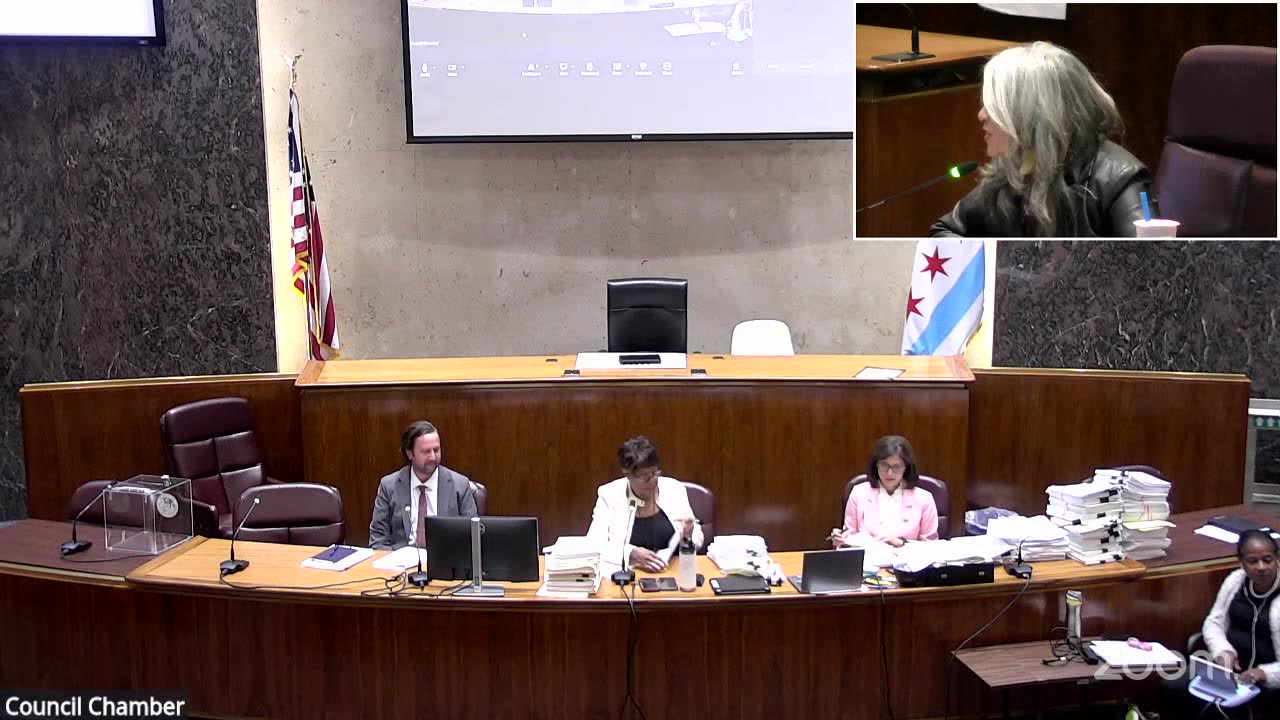
The Department of Housing described the project to the Finance Committee on Sept. 22.
- 90 apartments, all of them affordable to households earning no more than 60% of the area median income. Some units are set aside at 30% and 50%.
- One-, two- and three-bedroom units. Larger units are scarce in affordable housing, and Ald. Daniel La Spata (1st Ward) singled them out. "Two- and three-bedroom units, hard to build in affordable housing," he said.
- An 11-story building on what was a Streets and Sanitation lot, with 90 bike spaces, 16 parking spaces and community space.
- Construction is expected to start in the last quarter of 2026 and finish in June 2028.
The City estimates about 120 construction jobs, with at least half the construction workers required to be Chicago residents and prevailing wages on all construction jobs, plus eight permanent jobs once the building opens.
Why the alderperson pushed for it
The site is in the 48th Ward, represented by Ald. Leni Manaa-Hoppenworth, who had already moved the project through the City's land and zoning approvals. She told the Finance Committee that rents in this part of Edgewater have been climbing for years.
"It's an area in Edgewater that's had spiking rents and low vacancies for quite a number of years. And our families are struggling to stay in the neighborhood."
"People are telling me that their rents are spiking up to $250 a month now or more, and we need more housing."
She described the building as "electric, accessible," with more green space, on a stretch of Broadway "which needs a lot of love." Two residents also spoke in support during the committee's public comment.
How it's paid for
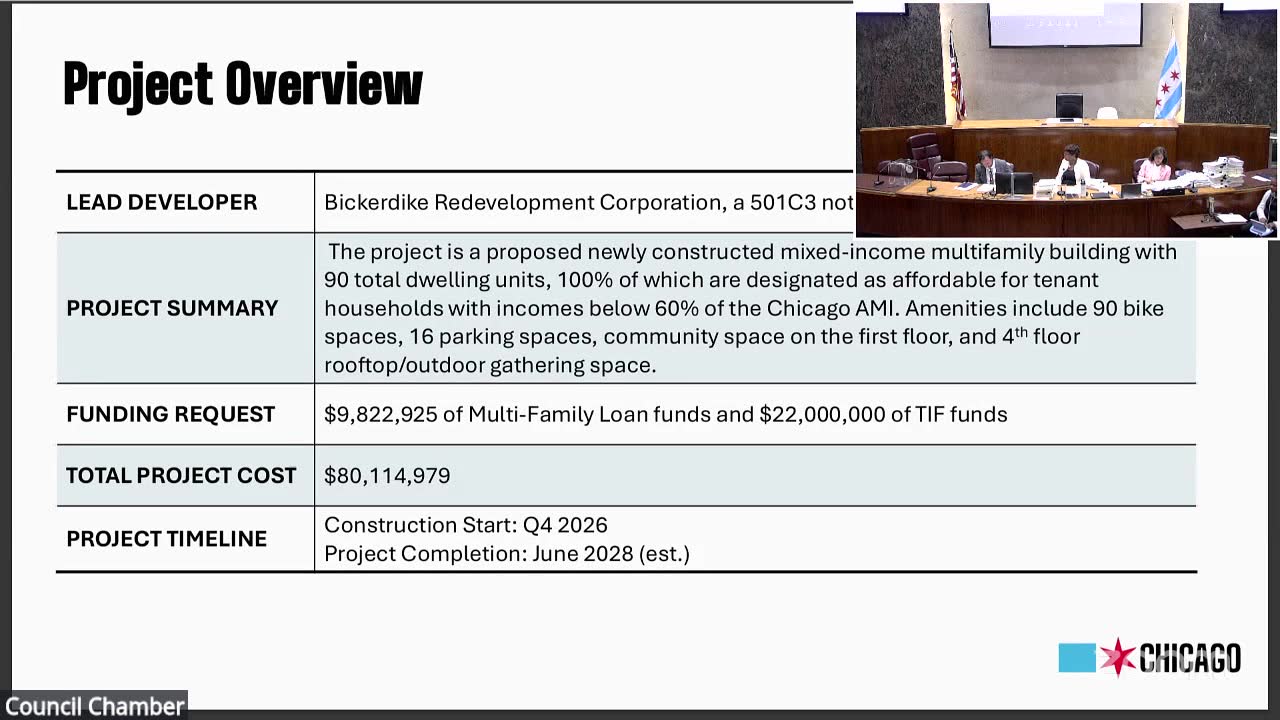
The building is financed as two linked deals, a "4%" project and a "9%" project, named for the two kinds of federal Low-Income Housing Tax Credits. Each half has its own owner and its own ordinance. The 4% half covers 57 apartments on floors 5 through 11, and the 9% half covers 33 apartments on floors 2 through 4.
The City's part includes:
- up to $19.5 million in housing revenue bonds. Our summary of the ordinance notes they are not a debt of the City;
- up to $22 million in tax increment financing from the Hollywood/Sheridan TIF district, of which $11.5 million is being moved over from the neighboring Bryn Mawr/Broadway TIF;
- about $9.8 million in loans from the City's multifamily program funds, split between the two halves;
- the city-owned lot, which the Department of Housing told the committee is being sold for a dollar.
Together, the two halves cost about $80 million to build, roughly $51.9 million for the 4% building and $28.1 million for the 9% one. When Ald. Brendan Reilly (42nd Ward) asked what that comes to per apartment, the Department of Housing put the average at about $890,000. More than half of it comes from tax credit equity and private lenders rather than the City.
The first ordinance could take effect only after the Council amended the Bryn Mawr/Broadway TIF plan, and the Council passed that amendment at the same Sept. 23 meeting.
What the committee asked
Most of the committee's questions were about the money. Ald. Daniel La Spata (1st Ward) asked why the City was selling its own lot to a project it was also helping pay for. The Department of Housing's analyst explained that the sale price is a dollar. The developer can count the land's appraised value as a "seller note" in the financing, which lets the City put in less money of its own.
Ald. Gilbert Villegas (36th Ward) asked to see the full financing again, the "stack," and noted how many pieces it has. Besides the City's bonds, TIF and loans, the deal relies on tax credit equity from a syndicator, a construction loan from JPMorgan Chase and a permanent loan from Cedar Rapids Bank & Trust. Both ordinances passed the committee on voice votes.
What it means for the neighborhood
For renters in Edgewater, the building adds 90 units with rents tied to income, a block from the Red Line. For the block itself, it puts homes on a former Streets and Sanitation lot, next to what Manaa-Hoppenworth called the largest field house on the North Side.
What happens next is mostly paperwork and construction. The financing still has to close and the land still has to change hands before Bickerdike starts building, which the City expects in the last quarter of this year. You can follow both ordinances on their pages: the 4% project and the 9% project.