

Chicago police on the CTA: Council approves $225 million, three-year off-duty officer deal
The City Council voted 50-0 on Sept. 23 to renew a deal putting an average of 180 off-duty Chicago police officers a day on the CTA, paid by the CTA.
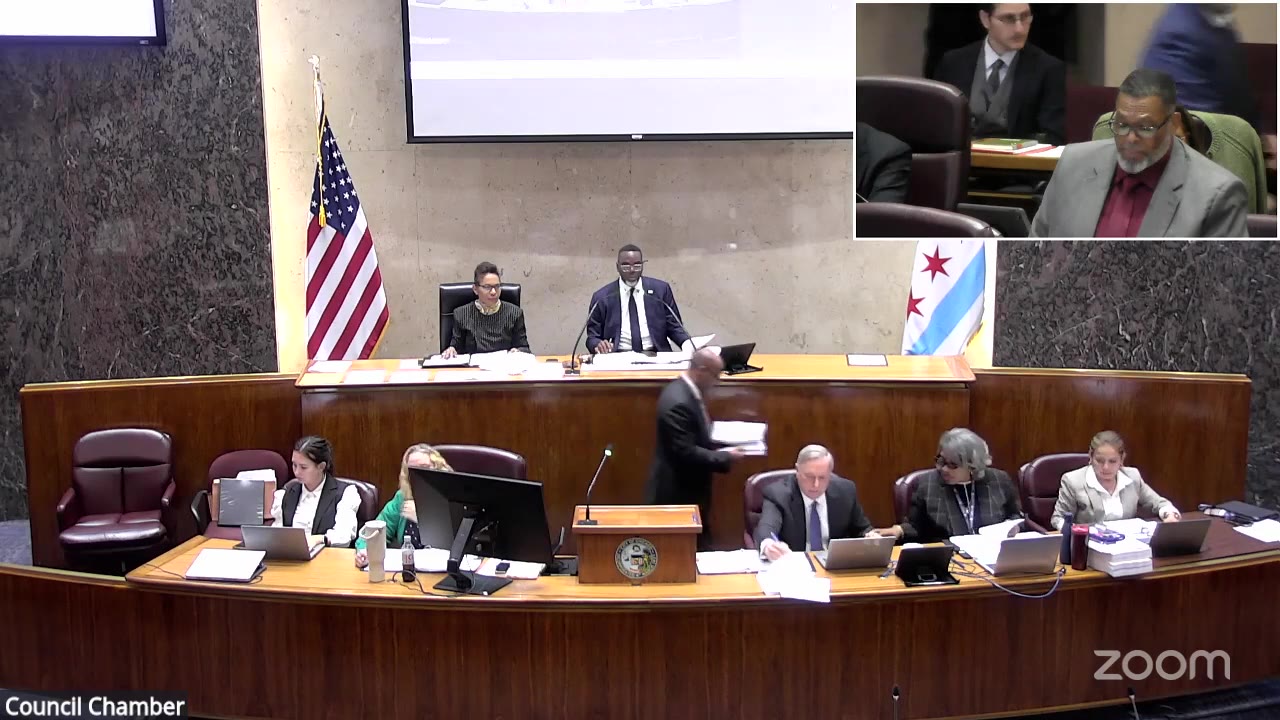
Chicago police officers will keep working off-duty shifts on the CTA for the next three years, with the transit agency picking up the bill, under an agreement the City Council approved on Sept. 23.
The ordinance, O2026-0027318, authorizes an intergovernmental agreement between the Chicago Police Department and the Chicago Transit Authority for the department's Voluntary Special Employment Program. Mayor Brandon Johnson sent it to the Council on July 15 at the request of the Police Department. It passed 50 to 0 and was signed the same day.
What does the agreement do?
Under the Voluntary Special Employment Program, sworn officers volunteer to work on their regular days off or furlough, enforcing law and order on CTA rail lines, buses and property.
The agreement, attached to the ordinance as Exhibit A, sets the size of the program. CPD will assign participating officers daily, at the CTA's request and with CPD's approval, with the number anticipated to average 180 officers a day over a year. The CTA may ask for up to 200; any increase above 200 depends on officers being available and on CPD's sign-off. CPD will also assign no more than an average of 20 participating supervisors a day, and keep between 12 and 15 full-time supervisors in its Public Transportation Section dedicated to the program. The officers patrol on foot. Subject to staffing and funds, the service runs 24 hours a day, including weekends and holidays.
Officers in the program are paid at their regular overtime rate. The CTA reimburses CPD for those wages plus 10 percent to cover court time, injury benefits and overhead, and for the dedicated supervisors' wages and benefits plus 40 percent. Reimbursement is capped at $225 million over the three-year term, about $75 million a year. The term is three years, extendable by written agreement, and either side can end it on 90 days' notice.
CPD must send the CTA monthly summaries with deployment schedules, daily logs and statistics on crimes, incidents and arrests.
What did alderpersons ask in committee?
The Committee on Police and Fire heard the agreement on Sept. 22. Our notes show roughly 40 minutes of questions before a unanimous vote.
Ald. Anthony Napolitano (41st Ward) asked whether the agreement was an extension or an increase, and said he had worked the program himself and found it impactful. Ald. Jeanette Taylor (20th Ward) asked how long the program has operated, whether crime on the CTA has gone down, how officers are chosen and whether officers working on days off get enough rest; a CPD representative who formerly commanded the public transportation section said officers sign up by seniority for up to three shifts a month and that the limit helps ensure time off.
The sharpest questions were about whether off-duty shifts are the right model at all. Ald. Jason Ervin (28th Ward) asked why the mass transit unit is not fully staffed with permanent officers instead of volunteers. He compared the voluntary approach to a pickup basketball game, questioned its long-term effectiveness and the burnout it causes, and asked how sergeants working occasional overtime shifts can supervise effectively. Ald. James Gardiner (45th Ward) said groups of officers often cluster near turnstiles while platforms and trains go uncovered, and asked whether data show more officers lead to less crime.
Ald. Derrick Curtis (18th Ward) and Ald. Nicholas Sposato (38th Ward) both asked why CTA shifts take priority over overtime needs in the police districts; Curtis said he would support the agreement but disagreed with that priority. Ald. Ronnie Mosley (21st Ward) asked whether CTA security staff could enforce City code instead. The chair, Ald. Chris Taliaferro (29th Ward), asked whether the program would include canine units on trains. Every member present voted to recommend it.
How did the vote go?
At the Council meeting the next day, Taliaferro reported the committee's one item.
"There was one item before the committee, which the committee reported, recommends do pass. Item number one was 202627318, an intergovernmental agreement with the Chicago Transit Authority to provide Chicago Police Department resources for voluntary special employment program at CTA facilities throughout the city."
The ordinance passed by the same roll call the Council used for the first item of the Finance Committee report, which recorded all 50 alderpersons as yes, with an unsuccessful motion to reconsider by Ald. Gregory Mitchell (7th Ward).
How each ward voted
50 yea · Sep 23, 2026 · Passed
 1Daniel La Spata: Yea
 2Brian Hopkins: Yea
 3Pat Dowell: Yea
 4Lamont J. Robinson: Yea
 5Desmon C. Yancy: Yea
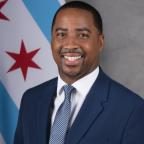 6William E. Hall: Yea
 7Gregory I. Mitchell: Yea
 8Michelle A. Harris: Yea
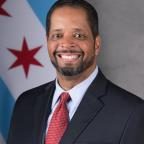 9Anthony Beale: Yea
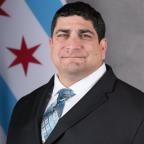 10Peter Chico: Yea
 11Nicole T. Lee: Yea
 12Julia M. Ramirez: Yea
 13Marty Quinn: Yea
 14Jeylú B. Gutiérrez: Yea
 15Raymond A. Lopez: Yea
 16Stephanie D. Coleman: Yea
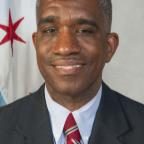 17David H. Moore: Yea
 18Derrick G. Curtis: Yea
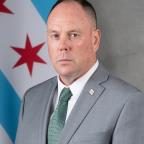 19Matthew J. O'Shea: Yea
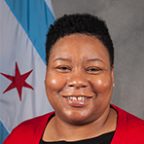 20Jeanette B. Taylor: Yea
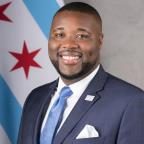 21Ronnie L. Mosley: Yea
 22Michael D. Rodriguez: Yea
 23Silvana Tabares: Yea
 24Monique L. Scott: Yea
 25Byron Sigcho-López: Yea
 26Jessica L. Fuentes: Yea
 27Walter R. Burnett: Yea
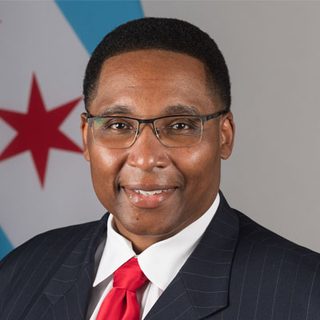 28Jason C. Ervin: Yea
 29Chris Taliaferro: Yea
 30Ruth Cruz: Yea
 31Felix Cardona Jr.: Yea
 32Scott Waguespack: Yea
 33Rossana Rodríguez Sánchez: Yea
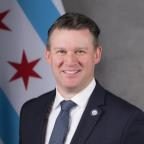 34William Conway: Yea
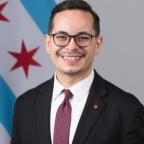 35Anthony J. Quezada: Yea
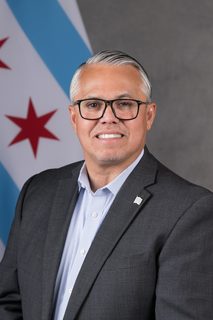 36Gilbert Villegas: Yea
 37Emma Mitts: Yea
 38Nicholas Sposato: Yea
 39Samantha Nugent: Yea
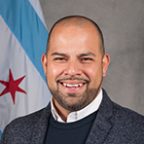 40Andre Vasquez Jr.: Yea
 41Anthony V. Napolitano: Yea
 42Brendan Reilly: Yea
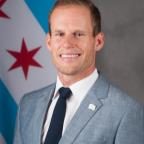 43Timothy R. Knudsen: Yea
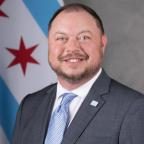 44Bennett R. Lawson: Yea
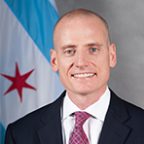 45James M. Gardiner: Yea
 46Angela Clay: Yea
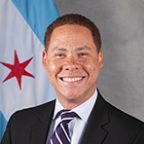 47Matthew J. Martin: Yea
 48Leni Manaa-Hoppenworth: Yea
 49Maria E. Hadden: Yea
 50Debra L. Silverstein: Yea
O2026-0027318: the roll call, the timeline and the documents
What it means on your block
- If you ride the CTA, the officers you see at stations and on trains will mostly be off-duty Chicago police working paid shifts, on foot, around the clock: an average of 180 a day, up to 200 if the CTA asks.
- If you live near a station, several alderpersons made the point that transit policing and neighborhood policing draw from the same officers.
- If you pay CTA fares or City taxes, the CTA, not the City, pays for the program, up to $225 million over three years. The monthly crime and deployment reports go to the CTA, not the Council.
- What the record does not show: whether CTA crime has fallen since the program began. Taylor and Gardiner asked; our notes record the questions, not a numerical answer.