A 15-cent tax on every delivered package: what Chicago's proposed packaging waste tax covers
The 2027 revenue ordinance would charge 15 cents per box or mailer shipped to a Chicago address, with exemptions for medicine and takeout. It is projected to raise $9 million.
If you get packages delivered in Chicago, Mayor Brandon Johnson's 2027 budget would add 15 cents to each box or mailer. The proposed Chicago Packaging Waste Tax is a small part of the budget, about $9 million a year, but it is the kind of charge residents would see on their own receipts.
Johnson introduced it in his Oct. 21 budget address as a way to raise money, "encourage people to shop local" and reduce waste (watch at 1:33:30). He credited the idea to the leadership of Ald. Walter Burnett (27th).
Advertisement
What the ordinance says
The tax is a new Chapter 3-57 in the 2027 Revenue Ordinance (O2026-0029643). According to the ordinance text:
- The rate is $0.15 per package, no matter how many items are inside.
- What counts: "covered packaging" is single-use packaging used to prepare, pack or ship goods sold at retail, including corrugated boxes, plastic or paper poly mailers and similar protective coverings.
- Who pays: the buyer. The seller collects it at the point of sale and sends it to the City. When a sale goes through a third-party platform, such as an online marketplace, the platform collects it.
- Where: retail sales in Chicago, and sales shipped to a Chicago address.
- When: Jan. 1, 2027, with the rest of the revenue ordinance.
What's exempt:
- the manufacturer's own sealed "original packaging";
- packaging used only for prescription and over-the-counter medicines, medical supplies and products such as insulin, syringes, tampons and sanitary napkins;
- containers a dine-in or take-out restaurant uses for food and drink;
- bags or containers shoppers bring themselves;
- wholesale boxes a store lets customers reuse to carry out their purchases;
- any bag already covered by the City's checkout bag tax, so the two do not stack.
How the City says it can do this
Illinois law limits the kinds of taxes Chicago can put on services without state approval. Block Club Chicago reported that the City modeled the package tax on its existing checkout bag tax and framed it as a tax on waste, which the City can regulate. The ordinance cites a section of the Illinois Municipal Code, 65 ILCS 5/8-11-6a, as its authority.
Advertisement
What our records add
The bag tax it copies is already on the books. The current checkout bag tax was carried forward in the Council's 2026 revenue ordinance, which passed 29 to 19 in December 2025. That ordinance also set the rules for other consumption taxes the package tax sits beside, including the City's tax on alcohol bought to take home.
Delivery apps get new duties too. The same 2027 revenue ordinance adds a definition of "delivery company," a business that takes alcohol orders and delivers them for a store, and requires those companies to collect and remit the City's off-premises alcohol tax and file monthly returns, according to the ordinance text.
Burnett is undecided on the bigger taxes. Burnett voted no on last year's alternative revenue ordinance. He told Block Club this week that he is undecided on the head tax and the lease tax increase, which are far larger than the package tax.
How each ward voted
29 yea, 19 nay, 2 not voting · Dec 19, 2025 · Passed
 1Daniel La Spata: Nay
 2Brian Hopkins: Yea
 3Pat Dowell: Yea
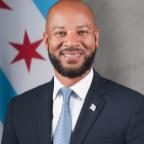 4Lamont J. Robinson: Nay
 5Desmon C. Yancy: Yea
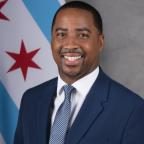 6William E. Hall: Nay
 7Gregory I. Mitchell: Yea
 8Michelle A. Harris: Yea
 9Anthony Beale: Yea
 10Peter Chico: Yea
 11Nicole T. Lee: Yea
 12Julia M. Ramirez: Nay
 13Marty Quinn: Yea
 14Jeylú B. Gutiérrez: Nay
 15Raymond A. Lopez: Yea
 16Stephanie D. Coleman: Not voting
 17David H. Moore: Nay
 18Derrick G. Curtis: Yea
 19Matthew J. O'Shea: Yea
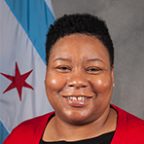 20Jeanette B. Taylor: Nay
 21Ronnie L. Mosley: Yea
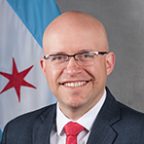 22Michael D. Rodriguez: Nay
 23Silvana Tabares: Yea
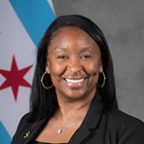 24Monique L. Scott: Yea
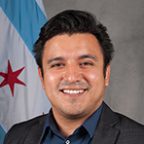 25Byron Sigcho-López: Nay
 26Jessica L. Fuentes: Nay
 27Walter R. Burnett: Nay
 28Jason C. Ervin: Nay
 29Chris Taliaferro: Nay
 30Ruth Cruz: Yea
 31Felix Cardona Jr.: Yea
 32Scott Waguespack: Yea
 33Rossana Rodríguez Sánchez: Nay
 34William Conway: Yea
 35Anthony J. Quezada: Nay
 36Gilbert Villegas: Yea
 37Emma Mitts: Yea
 38Nicholas Sposato: Yea
 39Samantha Nugent: Yea
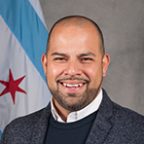 40Andre Vasquez Jr.: Not voting
 41Anthony V. Napolitano: Yea
 42Brendan Reilly: Yea
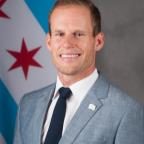 43Timothy R. Knudsen: Yea
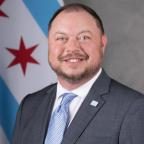 44Bennett R. Lawson: Yea
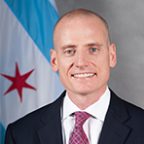 45James M. Gardiner: Yea
 46Angela Clay: Nay
 47Matthew J. Martin: Nay
 48Leni Manaa-Hoppenworth: Nay
 49Maria E. Hadden: Nay
 50Debra L. Silverstein: Yea
SO2025-0021719: the roll call, the timeline and the documents
What it would cost
At 15 cents a box, a household that gets 100 deliveries a year would pay $15. The Mayor's office projects $9 million in 2027, CBS Chicago reported. That is about 1% of the $882 million gap the budget is meant to close.
Advertisement
Block Club reported that retailers are expected to pass the tax on to customers. The ordinance itself puts the tax on the buyer and the duty to collect it on the seller.
What's next
The revenue ordinance is in the Committee on Finance. The Budget Committee's department hearings run through Nov. 10. The Council's public hearing on the budget is Dec. 8 at 11:30 a.m., and the budget must pass by Dec. 31.