

Three advisory questions on Chicago's Nov. 3 ballot, and how the Council picked them from a longer list
Voters will weigh in on seeking federal money over Operation Midway Blitz, restarting gunshot detection and a permanent festival site. State law allows only three, and our meeting records show how the slots were filled.
Chicago voters will find three citywide advisory questions on their Nov. 3 ballots, below the races for governor, Congress and the legislature. One asks whether the City should seek money from the federal government for the costs of last year's "Operation Midway Blitz" immigration enforcement. The others ask about restarting gunshot detection technology and building a permanent space for festivals and outdoor events, NBC Chicago reported on Sunday.
Why it matters: the answers do not change any law. They are advisory, so the City is not required to act on them. But the Council chose these three questions out of a longer list, and the results are likely to be cited in the 2027 mayor and Council races that are filing today.
Advertisement
The three questions
NBC Chicago published the full text of the immigration question, which asks whether the City should "pursue all lawful means to recover financial compensation from the federal government" for costs and economic harm from the operations, including lost tax revenue and public safety costs. NBC cited a University of Illinois Chicago Great Cities Institute study that estimated $1.26 billion in lost spending at area businesses in the first year of heightened enforcement, and NBC News reporting that more than 4,000 people were taken into custody in 2025.
The gunshot detection question asks whether the City should restart the technology, which Mayor Brandon Johnson moved to end in 2024, according to NBC. The festival question asks whether the City should develop a permanent site for large outdoor events.
What our records add: how these three made the ballot
State law allows three. At the July 9 Committee on Committees and Rules meeting, a deputy corporation counsel told members that the first three advisory questions the Council adopts go on the ballot, and that a question later repealed would not count (watch at 1:34:34). That rule shaped the next two Council meetings.
Advertisement
July 9: the committee picks. The committee rejected the Mayor's proposed question on a 3% surcharge on incomes over $1 million, after members objected to it being introduced directly in committee (watch at 44:32). It held his proposed question on a property tax relief fund (1:11:48). It passed the federal compensation question (58:48), the festival question (1:21:49) and the gunshot detection question (1:22:44), along with others for November and February.
July 15: festival and gunshot questions adopted. The full Council adopted the festival question (watch at 3:11:01) and the gunshot detection question (3:11:27). On a motion by Ald. Jason Ervin (28th) and Ald. Byron Sigcho-López (25th), the federal compensation question and several others were deferred to the next meeting (3:13:40).
July 22: the third slot. The Council adopted the federal compensation question (R2026-0026834) 46 to 1 on a motion by Ald. William Hall (6th), who described enforcement actions in Chicago and asked colleagues to let voters weigh in (watch at 47:42). Ald. Samantha Nugent (39th) then moved to table her own question on making the City's pension payment in the first quarter (R2026-0025443), noting the three-question limit (54:29). It was tabled by voice vote.
Advertisement
The same day, the Council adopted three questions for the February 2027 ballot instead: permanent monuments to Chicago music and arts, independent legal counsel for the Council and withholding funds from sister agencies that do not enforce debt repayment plans. Ervin argued it was premature to set February questions in July (55:29).
There is also a ward question. Voters in the 26th Ward will see a question on whether new shared housing units there should be limited. The Council adopted Ald. Jessica Fuentes's resolution (SR2025-0021045) 49 to 0 on July 15.
How each ward voted
49 yea, 1 not voting · Jul 15, 2026 · Adopted
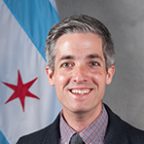 1Daniel La Spata: Yea
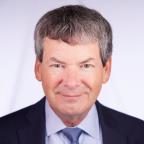 2Brian Hopkins: Yea
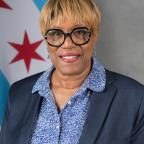 3Pat Dowell: Yea
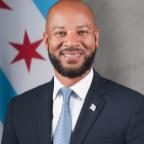 4Lamont J. Robinson: Yea
 5Desmon C. Yancy: Yea
 6William E. Hall: Yea
 7Gregory I. Mitchell: Yea
 8Michelle A. Harris: Yea
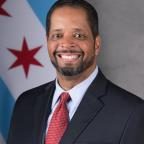 9Anthony Beale: Yea
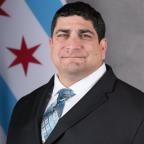 10Peter Chico: Yea
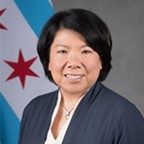 11Nicole T. Lee: Yea
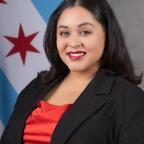 12Julia M. Ramirez: Yea
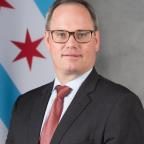 13Marty Quinn: Yea
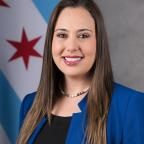 14Jeylú B. Gutiérrez: Yea
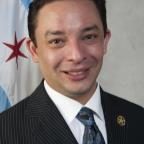 15Raymond A. Lopez: Yea
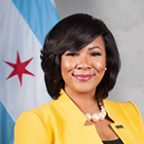 16Stephanie D. Coleman: Yea
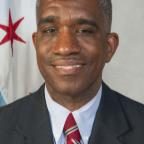 17David H. Moore: Yea
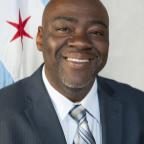 18Derrick G. Curtis: Yea
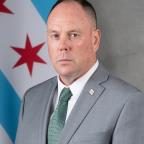 19Matthew J. O'Shea: Yea
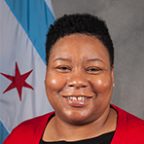 20Jeanette B. Taylor: Yea
 21Ronnie L. Mosley: Yea
 22Michael D. Rodriguez: Yea
 23Silvana Tabares: Yea
 24Monique L. Scott: Yea
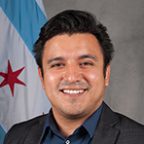 25Byron Sigcho-López: Yea
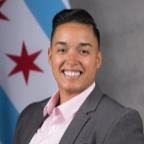 26Jessica L. Fuentes: Yea
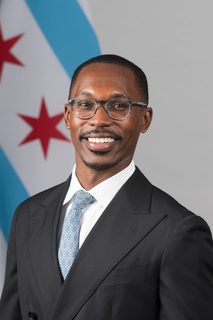 27Walter R. Burnett: Yea
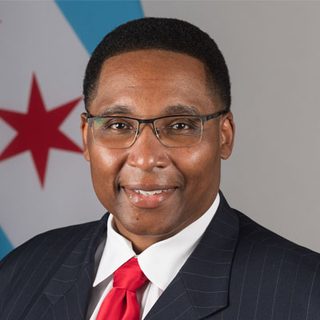 28Jason C. Ervin: Yea
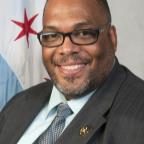 29Chris Taliaferro: Yea
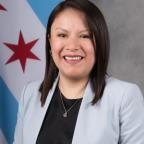 30Ruth Cruz: Yea
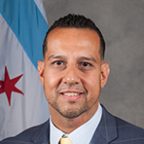 31Felix Cardona Jr.: Yea
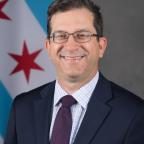 32Scott Waguespack: Yea
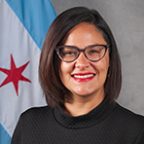 33Rossana Rodríguez Sánchez: Yea
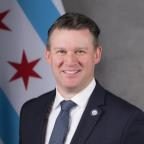 34William Conway: Yea
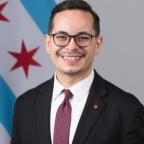 35Anthony J. Quezada: Yea
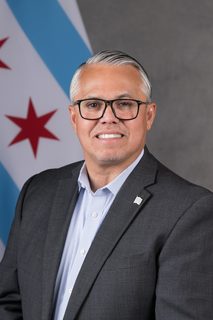 36Gilbert Villegas: Yea
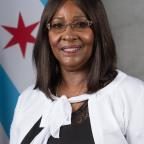 37Emma Mitts: Not voting
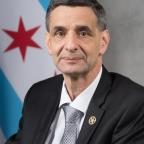 38Nicholas Sposato: Yea
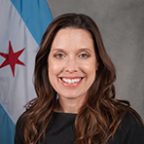 39Samantha Nugent: Yea
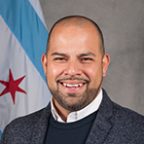 40Andre Vasquez Jr.: Yea
 41Anthony V. Napolitano: Yea
 42Brendan Reilly: Yea
 43Timothy R. Knudsen: Yea
 44Bennett R. Lawson: Yea
 45James M. Gardiner: Yea
 46Angela Clay: Yea
 47Matthew J. Martin: Yea
 48Leni Manaa-Hoppenworth: Yea
 49Maria E. Hadden: Yea
 50Debra L. Silverstein: Yea
SR2025-0021045: the roll call, the timeline and the documents
The gunshot detection question in context
The question comes as the City moves ahead on its own. On Oct. 20, the Committee on Contracting Oversight and Equity was told the City would start a gunshot detection pilot in six police districts within two weeks, as we reported. In 2024, the Council voted 33 to 14 on an order directing the police superintendent to extend or renew the gunshot detection contract. At the July 9 committee meeting, several public commenters spoke against the referendum, and Ald. Raymond Lopez (15th) objected to how a motion to table it was handled (watch at 1:23:59).
What's next
Early voting is underway for the Nov. 3 election with sites in all 50 wards since Oct. 19, NBC Chicago reported. Advisory results are reported by the Board of Election Commissioners with the rest of the returns. Any follow-up, such as a lawsuit seeking federal money or a change to gunshot detection contracts, would need action by the Mayor, the Law Department or the Council.