

Johnson's head tax is back: $25 a month per worker at big employers, and the 29 votes that stopped it last year
The 2027 revenue ordinance would tax employers with 125 or more full-time workers, with a credit for jobs in disadvantaged areas. Here is the text, and last December's roll call.
Mayor Brandon Johnson is asking the City Council, for the second year in a row, to approve a per-employee tax on Chicago's largest employers. The Council turned down a similar tax last December. Within hours of the Oct. 21 budget address, some of the same alderpersons said they would do it again.
Why it matters: the tax is one piece of a plan to close a budget gap of about $882 million, Block Club Chicago reported. If the Council removes it, the roughly $101 million the Mayor's office expects it to raise, per CBS Chicago, has to come from somewhere else or from spending.
Advertisement
What the ordinance says
The tax is written into the 2027 Revenue Ordinance (O2026-0029643) as a new "Chicago Employers' Expense Tax." The text (Article VII) says:
- It applies to an employer with 125 or more full-time employees or commission merchants working at least partly in Chicago, for any quarter it stays at that size.
- Starting Jan. 1, 2027, the employer pays $25 a month for each of those workers.
- The tax falls on "the employer alone" and may not be passed on to the worker.
- No tax is due for a month in which the employer drops below 125.
The same article creates a SEED credit, short for SEDA Employment Expansion and Development. An employer gets a $25-a-month credit for each full-time worker who spends most of their hours at a location in a "socio-economically disadvantaged area," a set of census tracts the planning commissioner designates. The credit cannot be more than the tax owed. Block Club reported that the tax would reach about 2.8% of Chicago businesses.
In the Council chamber, Johnson said the largest corporations outside those areas would "chip in just $25 per month" per Chicago employee (watch at 1:29:32). He said the credit lets employers "avoid the tax entirely" if they bring jobs to neighborhoods that need them.
Advertisement
What our records add: last year's vote
Last year's fight ended on Dec. 19, 2025, when the Council passed an alternative 2026 revenue ordinance that left the head tax out. It passed 29 to 19, with two members not voting, as CBS Chicago reported.
How each ward voted
29 yea, 19 nay, 2 not voting · Dec 19, 2025 · Passed
 1Daniel La Spata: Nay
 2Brian Hopkins: Yea
 3Pat Dowell: Yea
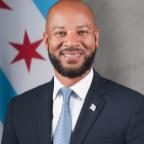 4Lamont J. Robinson: Nay
 5Desmon C. Yancy: Yea
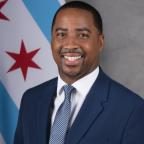 6William E. Hall: Nay
 7Gregory I. Mitchell: Yea
 8Michelle A. Harris: Yea
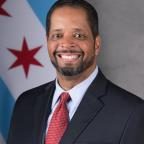 9Anthony Beale: Yea
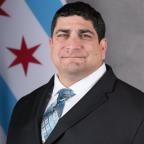 10Peter Chico: Yea
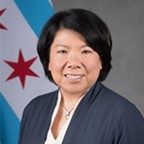 11Nicole T. Lee: Yea
 12Julia M. Ramirez: Nay
 13Marty Quinn: Yea
 14Jeylú B. Gutiérrez: Nay
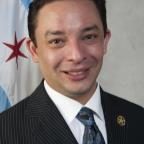 15Raymond A. Lopez: Yea
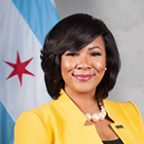 16Stephanie D. Coleman: Not voting
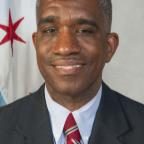 17David H. Moore: Nay
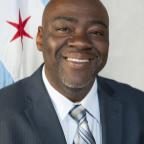 18Derrick G. Curtis: Yea
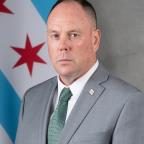 19Matthew J. O'Shea: Yea
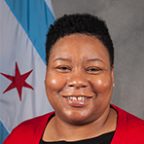 20Jeanette B. Taylor: Nay
 21Ronnie L. Mosley: Yea
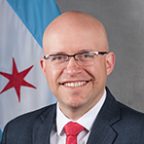 22Michael D. Rodriguez: Nay
 23Silvana Tabares: Yea
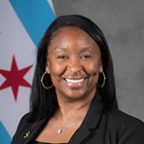 24Monique L. Scott: Yea
 25Byron Sigcho-López: Nay
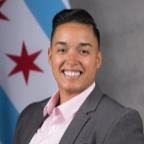 26Jessica L. Fuentes: Nay
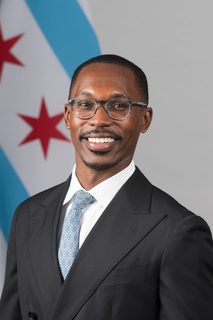 27Walter R. Burnett: Nay
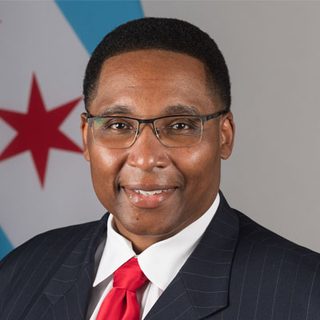 28Jason C. Ervin: Nay
 29Chris Taliaferro: Nay
 30Ruth Cruz: Yea
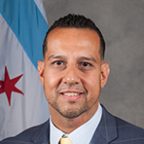 31Felix Cardona Jr.: Yea
 32Scott Waguespack: Yea
 33Rossana Rodríguez Sánchez: Nay
 34William Conway: Yea
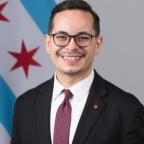 35Anthony J. Quezada: Nay
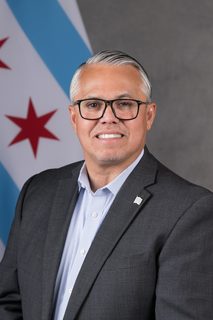 36Gilbert Villegas: Yea
 37Emma Mitts: Yea
 38Nicholas Sposato: Yea
 39Samantha Nugent: Yea
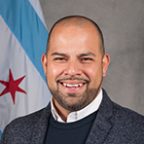 40Andre Vasquez Jr.: Not voting
 41Anthony V. Napolitano: Yea
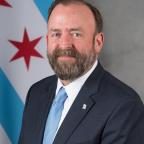 42Brendan Reilly: Yea
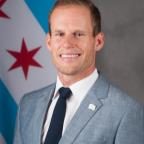 43Timothy R. Knudsen: Yea
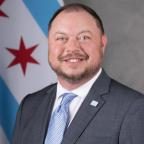 44Bennett R. Lawson: Yea
 45James M. Gardiner: Yea
 46Angela Clay: Nay
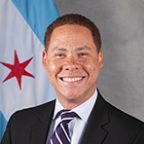 47Matthew J. Martin: Nay
 48Leni Manaa-Hoppenworth: Nay
 49Maria E. Hadden: Nay
 50Debra L. Silverstein: Yea
SO2025-0021719: the roll call, the timeline and the documents
Voted yes on the alternative (29): Hopkins (2), Dowell (3), Yancy (5), Mitchell (7), Harris (8), Beale (9), Chico (10), Lee (11), Quinn (13), Lopez (15), Curtis (18), O'Shea (19), Mosley (21), Tabares (23), Scott (24), Cruz (30), Cardona (31), Waguespack (32), Conway (34), Villegas (36), Mitts (37), Sposato (38), Nugent (39), Napolitano (41), Reilly (42), Knudsen (43), Lawson (44), Gardiner (45), Silverstein (50).
Voted no (19): La Spata (1), Robinson (4), Hall (6), Ramirez (12), Gutiérrez (14), Moore (17), Taylor (20), Rodriguez (22), Sigcho-López (25), Fuentes (26), Burnett (27), Ervin (28), Taliaferro (29), Rodríguez Sánchez (33), Quezada (35), Clay (46), Martin (47), Manaa-Hoppenworth (48), Hadden (49).
Advertisement
Not voting: Coleman (16), Vasquez (40).
News reports describe a coalition of 29 alderpersons who opposed the head tax last year and say they still do, including ABC7. Our records show the roll call, not who belongs to the coalition. Ald. Bill Conway (34th) told CBS Chicago that "twenty-nine of us signed that letter" and that the head tax was "dead on arrival." Ald. Gilbert Villegas (36th) argued against it in an interview with WGN Radio.
Not everyone has drawn the same line. Ald. William Hall (6th), a no vote on last year's alternative, told CBS Chicago the tax is "an invitation" for companies to move closer to their workers. Ald. Walter Burnett (27th), also a no vote, told Block Club he was undecided. Ald. Andre Vasquez (40th), who did not vote last December, told Block Club he supports some of the plan and urged colleagues to negotiate.
Advertisement
The math is simple: the revenue ordinance needs 26 votes if all 50 members vote. If the 29 who voted for last year's alternative hold together, they have enough votes to pass a revenue ordinance without the head tax, as they did in December.
What's next
The revenue ordinance sits in the Committee on Finance, chaired by Ald. Pat Dowell (3rd), who moved last year's alternative on the Council floor. Department hearings before the Budget Committee run through Nov. 10. The Council's public hearing on the budget is Dec. 8. If the Council again passes a budget without the tax, it will have to find the money elsewhere or cut spending; Block Club reported the coalition has not yet named other taxes it would back.