

Chicago data centers lose their energy benchmarking exemption; water use data goes to the City
The City Council voted 50-0 on Sept. 23 to make buildings with data centers report energy scores publicly and to require water use data for large buildings.
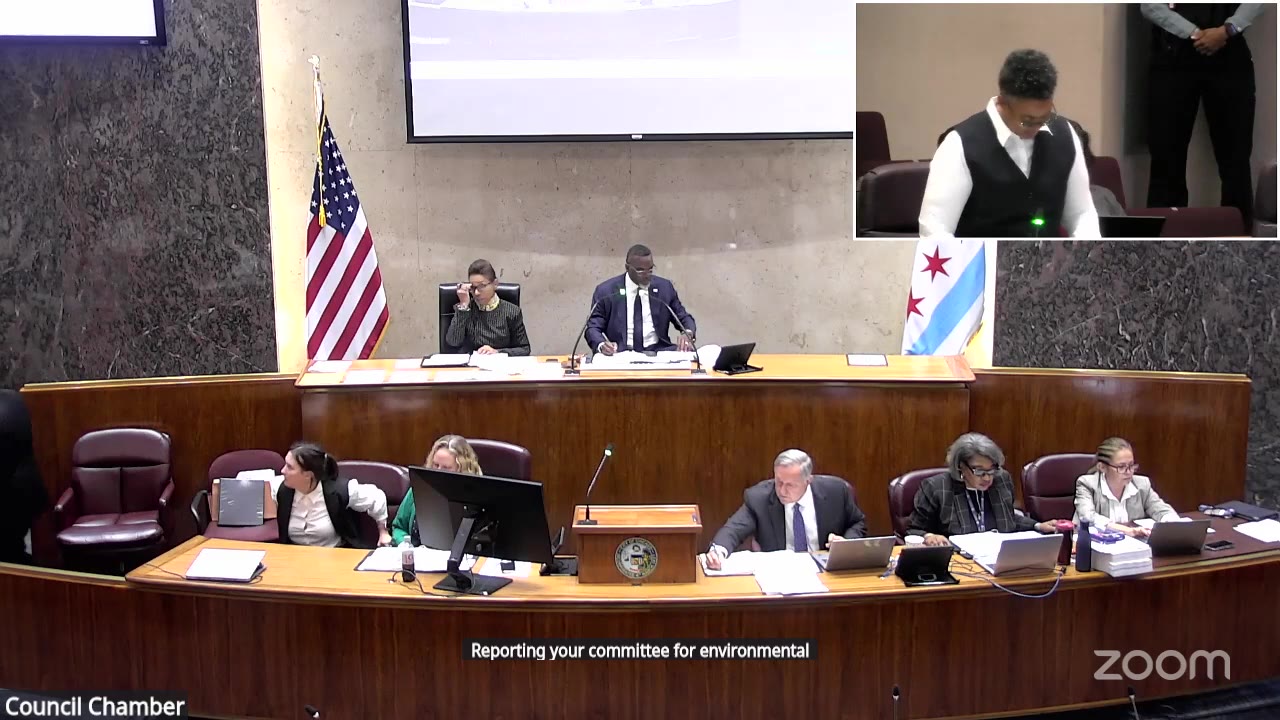
Data centers in Chicago can no longer keep their energy scores out of public view, and the City's water department now has to hand over water use figures for the city's largest buildings.
The City Council passed SO2026-0027165 on Sept. 23 by a vote of 50 to 0. Ald. Maria Hadden (49th Ward), who chairs the Committee on Environmental Protection and Energy, sponsored it with 22 co-sponsors. It amends the City's building energy benchmarking law, Chapter 18-14 of the Municipal Code, and took effect on passage and publication.
What changed in the benchmarking law?
Chicago's benchmarking law requires large buildings, the Code's Group 1 and Group 2 covered buildings, to report their energy use, and lets the Chief Sustainability Officer publish each building's benchmarking information and energy performance rating. Until now the law had an exception: the City could not publish an individual rating for a building where a data center, television studio or trading floor took up more than 10 percent of the floor area, until the benchmarking tool could adjust for it.
The ordinance strikes data centers from that exception. Television studios and trading floors stay in it. It also adds to the definition of a covered building so that any Group 1 or Group 2 building with a data center counts, and defines a data center as a space designed and equipped for high-density computing equipment such as server racks, used for data storage and processing.
The Commissioner of Water Management now shall, rather than may, transmit water usage information for covered buildings to the Chief Sustainability Officer. The Chief Sustainability Officer may then, by rule, select certain covered buildings and make their water usage data public. An owner can ask that its data stay private on grounds already listed in the Code; if the request is denied, the data can be released.
What did the committee learn about the data?
The Committee on Environmental Protection and Energy took up the ordinance on Sept. 1, substituted it, amended it and recommended it.
Hadden said the ordinance follows a recommendation in a Department of Environment report and would collect energy and water data without regulating data center operations. She said the substitute was written to bring data centers in without reopening the whole benchmarking standard.
Ald. Raymond Lopez (15th Ward) asked how many covered buildings there are and whether the Department of Water Management had provided water data for any of them. Joe Arcus, the City staff member answering, said about 3,800 buildings are covered and the department had not requested or received water usage data for any. Lopez then moved the amendment changing the water commissioner's duty from may to shall, saying departments were working in silos.
Ald. William Conway (34th Ward) asked why the Chief Sustainability Officer gets discretion over whether to make water data public rather than being required to. He said he would support it as an improvement, but administrations should not have that discretion.
Ald. Daniel La Spata (1st Ward) brought Water Management figures showing 910 accounts that used more than 1 million gallons a year, and said knowing who those large users are is useful. He asked whether the data would appear on the City's open data portal and in the annual benchmarking report; Arcus said it would. Lopez also proposed sending the data to the Council each year, then withdrew it after Hadden suggested a separate annual report to the committee.
How did the vote go?
At the Sept. 23 Council meeting, Hadden reported the committee's work.
"Item one is SO2026-0027165, amendment of Municipal Code sections 18-14-101.3 and 18-14-101.4 regarding covered buildings and related public availability of water usage data, and section 18-14-102.3, removing the data center exception from benchmarks and performance ratings made public by the chief sustainability officer."
The ordinance passed by the same roll call the Council used for the first item of the Finance Committee report, which recorded all 50 alderpersons as yes, with an unsuccessful motion to reconsider by Ald. Gregory Mitchell (7th Ward).
How each ward voted
50 yea · Sep 23, 2026 · Passed
 1Daniel La Spata: Yea
 2Brian Hopkins: Yea
 3Pat Dowell: Yea
 4Lamont J. Robinson: Yea
 5Desmon C. Yancy: Yea
 6William E. Hall: Yea
 7Gregory I. Mitchell: Yea
 8Michelle A. Harris: Yea
 9Anthony Beale: Yea
 10Peter Chico: Yea
 11Nicole T. Lee: Yea
 12Julia M. Ramirez: Yea
 13Marty Quinn: Yea
 14Jeylú B. Gutiérrez: Yea
 15Raymond A. Lopez: Yea
 16Stephanie D. Coleman: Yea
 17David H. Moore: Yea
 18Derrick G. Curtis: Yea
 19Matthew J. O'Shea: Yea
 20Jeanette B. Taylor: Yea
 21Ronnie L. Mosley: Yea
 22Michael D. Rodriguez: Yea
 23Silvana Tabares: Yea
 24Monique L. Scott: Yea
 25Byron Sigcho-López: Yea
 26Jessica L. Fuentes: Yea
 27Walter R. Burnett: Yea
 28Jason C. Ervin: Yea
 29Chris Taliaferro: Yea
 30Ruth Cruz: Yea
 31Felix Cardona Jr.: Yea
 32Scott Waguespack: Yea
 33Rossana Rodríguez Sánchez: Yea
 34William Conway: Yea
 35Anthony J. Quezada: Yea
 36Gilbert Villegas: Yea
 37Emma Mitts: Yea
 38Nicholas Sposato: Yea
 39Samantha Nugent: Yea
 40Andre Vasquez Jr.: Yea
 41Anthony V. Napolitano: Yea
 42Brendan Reilly: Yea
 43Timothy R. Knudsen: Yea
 44Bennett R. Lawson: Yea
 45James M. Gardiner: Yea
 46Angela Clay: Yea
 47Matthew J. Martin: Yea
 48Leni Manaa-Hoppenworth: Yea
 49Maria E. Hadden: Yea
 50Debra L. Silverstein: Yea
SO2026-0027165: the roll call, the timeline and the documents
Is a data center moratorium next?
The benchmarking vote came the same day the Mayor sent the Council something bigger. Among the Mayor's communications on Sept. 23 was an ordinance, transmitted with Hadden and other alderpersons, imposing a one-year moratorium on the issuance of permits and approvals for new or expanded data centers in the city. Two committees were called for it, so under the Council's rules it went to the Committee on Committees and Rules. Ald. Andre Vasquez (40th Ward) introduced a resolution to put a 40th Ward advisory referendum on a data center moratorium on the Feb. 23, 2027 ballot, and introduced it again on Oct. 14. Neither has had a hearing.
What it means on your block
- If you own or manage a large building, especially one with a data center, your energy rating can now be published, and the water department will send your water use to the Chief Sustainability Officer. Whether your water data becomes public depends on rules the officer has yet to write.
- If you want to see the data, City staff told the committee it will be in the open data set and the annual benchmarking report.