Chicago City Council votes are unanimous 92% of the time. Here is what it agrees on, and where it splits
Of 1,224 final roll calls on key legislation since May 2023, 1,131 drew no "no" votes. The splits were mostly over taxes, borrowing and Council rules.
The Chicago City Council votes unanimously far more often than it splits. Of the 1,224 final roll calls on key legislation recorded since the current term began on May 15, 2023, 1,131 drew no "no" votes, or 92.4%. That is the figure on our Insights page, and we recounted it from the City Clerk's roll calls for this story and got the same number. The other 93 roll calls, 7.6%, had at least one alderperson voting no. Those 1,224 votes came at 60 City Council meetings, the most recent on Oct. 14, 2026.
What counts as "unanimous" here?
A roll call counts as unanimous when no member voted no. Members who were absent, or present but not voting, don't break it. By that measure 1,131 roll calls were unanimous. A stricter measure, every seated member present and voting yes, fits 458 of them. The other 673 had at least one absence or one member not voting, but still no "no" votes.
The count covers what the City Clerk flags as key legislation, the ordinances, resolutions, orders and appointments that are not routine. It leaves out the thousands of routine items the Clerk files separately, such as sign permits, disabled-parking signs and birthday congratulations, which pass in bulk. Each matter counts once, at its final action. A vote to defer an item, or a procedural motion, is not in this count.
What does the Council agree on?
Most of the Council's key legislation is about places and money attached to them, and most of that passes without dissent.
- Restricted residential zones, the precinct-by-precinct limits on short-term rentals, came up 112 times. None drew a no vote.
- Historical landmarks: 51 votes, one divided.
- Tax incentives for specific properties: 65 votes, two divided. City property sales and leases: 64 votes, two divided.
- Special service areas (17) and tax increment financing districts (10): no divided votes.
- Agreements, the largest group after code changes, which covers redevelopment deals, leases and intergovernmental agreements: 269 votes, 20 divided.
Where does the Council split?
Divided votes cluster in a few kinds of legislation. Changes to the Municipal Code made up 43 of the 93 divided roll calls, out of 449 code changes (9.6%). The rates were higher for:
- Bonds and borrowing: 8 of 38 (21.1%).
- Budget and appropriations: 3 of 11 (27.3%).
- Appointments: 3 of 13 (23.1%).
- The Council's own rules and business, which the Clerk files under "City Council": 4 of 8 (50%).
Even divided votes are usually lopsided. Of the 93, 44 had a single no vote. Only 28 drew 10 or more.
The closest votes of the term show what the Council fights about. On Jan. 31, 2024, a resolution expressing support for United Nations Resolution 377, filed by Ald. Daniel La Spata (1st Ward), was recorded as adopted with 23 yeas and 23 nays (SR2023-0006422). On Dec. 16, 2024, the 2025 revenue ordinance and property tax levy, filed by Mayor Brandon Johnson, passed 27 to 23 (SO2024-0013671). On Feb. 26, 2025, the Mayor's general obligation bond issue passed 26 to 23. On June 18, 2025, an ordinance on curfews for mass gatherings, filed by Ald. Brian Hopkins (2nd Ward), passed 27 to 22; the Clerk's record shows the Mayor later vetoed it.
How each ward voted
25 yea, 23 nay · Dec 16, 2024 · Passed
 1Daniel La Spata: Yea
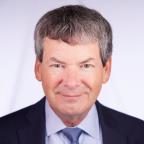 2Brian Hopkins: Nay
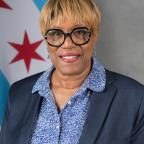 3Pat Dowell: Yea
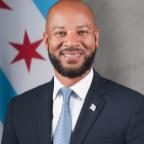 4Lamont J. Robinson: Yea
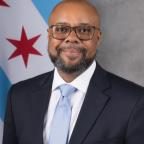 5Desmon C. Yancy: Yea
 6William E. Hall: Yea
 7Gregory I. Mitchell: Yea
 8Michelle A. Harris: Yea
 9Anthony Beale: Nay
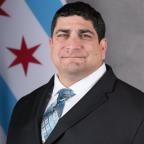 10Peter Chico: Nay
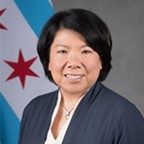 11Nicole T. Lee: Nay
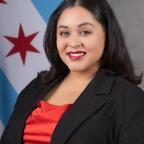 12Julia M. Ramirez: Yea
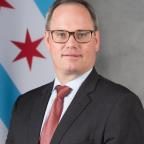 13Marty Quinn: Nay
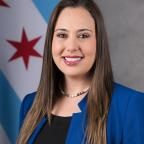 14Jeylú B. Gutiérrez: Yea
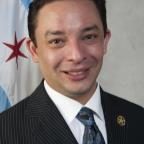 15Raymond A. Lopez: Nay
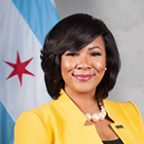 16Stephanie D. Coleman: Yea
 17David H. Moore: Yea
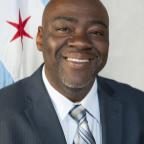 18Derrick G. Curtis: Nay
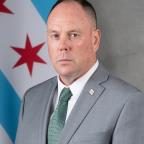 19Matthew J. O'Shea: Nay
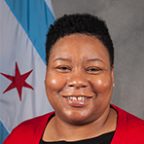 20Jeanette B. Taylor: Yea
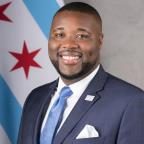 21Ronnie L. Mosley: Yea
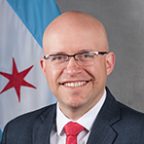 22Michael D. Rodriguez: Yea
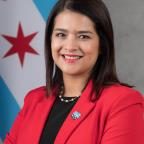 23Silvana Tabares: Nay
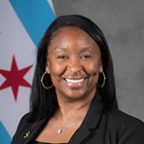 24Monique L. Scott: Nay
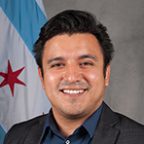 25Byron Sigcho-López: Yea
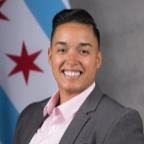 26Jessica L. Fuentes: Yea
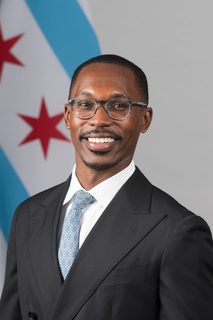 27Walter R. Burnett: Not in office
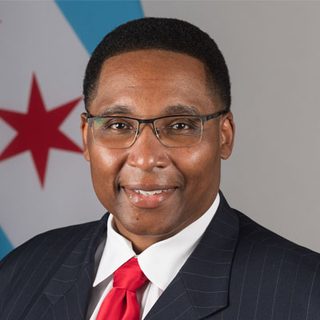 28Jason C. Ervin: Yea
 29Chris Taliaferro: Yea
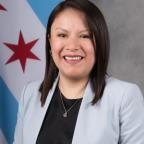 30Ruth Cruz: Yea
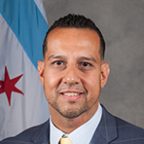 31Felix Cardona Jr.: Nay
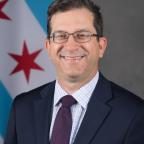 32Scott Waguespack: Nay
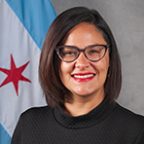 33Rossana Rodríguez Sánchez: Yea
 34William Conway: Nay
 35Anthony J. Quezada: Not in office
 36Gilbert Villegas: Nay
 37Emma Mitts: Yea
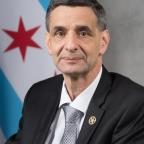 38Nicholas Sposato: Yea
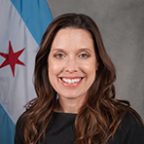 39Samantha Nugent: Nay
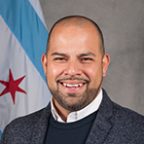 40Andre Vasquez Jr.: Nay
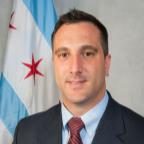 41Anthony V. Napolitano: Nay
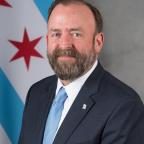 42Brendan Reilly: Nay
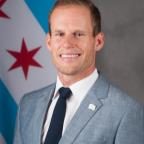 43Timothy R. Knudsen: Nay
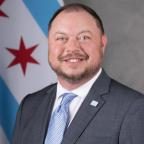 44Bennett R. Lawson: Nay
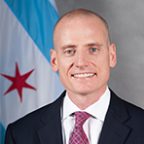 45James M. Gardiner: Nay
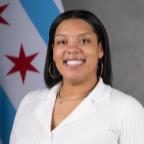 46Angela Clay: Yea
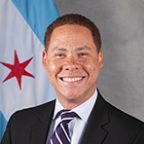 47Matthew J. Martin: Nay
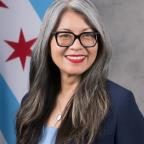 48Leni Manaa-Hoppenworth: Yea
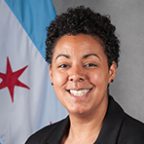 49Maria E. Hadden: Yea
 50Debra L. Silverstein: Nay
SO2024-0013671: the roll call, the timeline and the documents
How often does something fail?
Rarely. Nine of the 1,224 final actions were Failed to Pass. The largest margin was on Feb. 15, 2024, when an ordinance adding an arbitration option in certain police disciplinary cases failed 18 to 32 (SO2024-0007332). In June 2026, an ordinance to ban sweepstakes machines failed 15 to 33. In February 2026, a pilot program letting residents submit recorded evidence of parking violations failed 16 to 31.
Has the Council become more divided?
Not much, by this measure. The share of divided roll calls was 8.4% in 2023 (16 of 190 from May on), 7.0% in 2024 (25 of 356), 6.9% in 2025 (22 of 319) and 8.4% so far in 2026 (30 of 359, through Oct. 14). The 2026 figure, with four months left, is level with the first year of the term.
What the Council's legislation is about this term, by category
Source: City Clerk · as of Oct 21, 2026
Non-routine matters introduced since May 15, 2023, by the Clerk's category, as of the page view. Source: City Clerk.
What the numbers don't show
A final roll call is the last step. Disagreements often happen earlier, in committee, where items can be amended, held or never called; more than 400 items introduced this term have been waiting in committee for over a year. A unanimous final vote can also follow a long debate on the floor. The roll calls record how members voted, not why.
The figures here come from the Clerk's roll calls as copied into our data on Oct. 17, 2026. The script that recomputes every number, `tools/on-my-block/stories/s1_unanimous.py`, is in our public repository. Four roll calls in the Clerk's data carry a mistyped action date (1900 or 2021); we used their final-action dates (2023 and 2025) for the year counts.
What it means on your block
Most of what the Council decides for a single block, a parking zone, a landmark, a short-term rental limit in a precinct, a property sale, passes without a single no vote. The real decision is often whether the item gets filed and called at all, and that starts with your alderperson. To see how your alderperson voted on the 93 divided roll calls, open your ward's page from the wards list; every divided vote is listed there with their vote.