

North CenterLincoln SquareLakeview
Chicago bans polystyrene foam containers from City purchases starting Jan. 1
Chicago's City Council voted Oct. 14 to bar City departments from buying polystyrene foam food containers, starting Jan. 1, 2027.
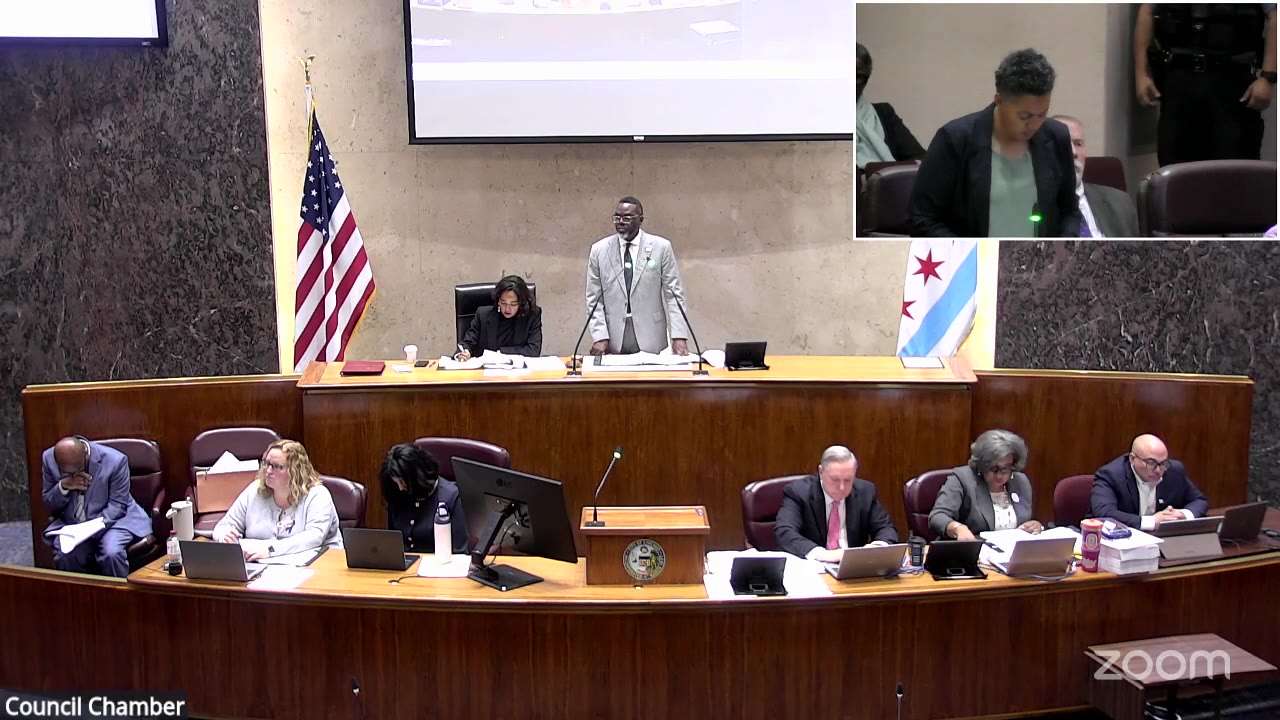
Polystyrene foam, the lightweight white material in clamshell takeout boxes and coffee cups, is on its way out of Chicago's City Hall, its field houses and its community events. On Oct. 14 the City Council passed an ordinance that bars City departments from buying disposable food service containers made of polystyrene foam, starting Jan. 1, 2027.
The ordinance, SO2026-0025472, was sponsored by Ald. Matthew Martin (47th Ward), with Ald. Daniel La Spata (1st Ward) and Ald. Bennett Lawson (44th Ward) as co-sponsors. It adds a new Section 2-92-591, titled 'Single-use plastics procurement,' to the chapter of the Municipal Code that governs how the City buys things.
What does the foam ban cover?
The rule is a purchasing rule. It applies to what City departments buy, not to what restaurants, grocers or residents use. The ordinance text has two parts:
- City departments may not procure disposable food service containers composed, in whole or in part, of polystyrene foam.
- When departments buy disposable food service containers for use by City departments or at any City facility, event or programming, they must buy only compostable foodware or recyclable foodware.
Polystyrene foam is defined as blown polystyrene and expanded or extruded foams using a styrene monomer. A disposable food service container means serviceware designed for one-time use, including serviceware for take-out foods, bakery products and leftovers. Compostable means an item that meets the ASTM D6400 standard and has been certified by the Biodegradable Products Institute; recyclable foodware means single-use items that are commonly accepted in local curbside residential recycling pick-up.
The definition leaves out polystyrene foam coolers, egg cartons, ice chests used for processing or shipping seafood, and serviceware used to package raw meat, poultry, fish or seafood.
What are the exceptions?
The ordinance lists six situations where it does not apply:
- Containers needed for safety, such as lids, drink stoppers, beverage trays and cup sleeves for drinks hotter than 170 degrees Fahrenheit.
- Containers needed to address accessibility concerns.
- Containers dispensed from an automatic food vending machine.
- Containers that come prepackaged with or attached to food or beverages before the City receives them.
- Any department granted a waiver by the Chief Procurement Officer, under rules that office writes.
- Purchases made under a contract entered into before Jan. 1, 2027, unless the contract is renewed or extended on or after that date.
The Chief Procurement Officer is authorized to adopt rules to administer and enforce the section. The ordinance takes effect on Jan. 1, 2027, after passage and publication.
Where did the ordinance come from?
Martin introduced the ordinance on May 20, 2026, and it went to the Committee on Environmental Protection and Energy. The committee took it up on Oct. 8, where it accepted a substitute version and recommended it for passage. Our notes on that meeting say Martin presented the ordinance as a ban on City procurement of polystyrene foam foodware, effective Jan. 1, citing the health and environmental harms of microplastics and input from City departments. Ald. Maria Hadden (49th Ward), the committee chair, supported it as a first step toward a more sustainable city and thanked Martin for his work.
The committee heard 16 public commenters that day on all of its items, which also included a resolution on heat mitigation and cooling centers, a resolution calling on the General Assembly to pass the POWER Act, and the utility billing relief ordinance, which was held.
How did the vote go?
At the Oct. 14 City Council meeting, Hadden reported the ordinance as the first item of her committee's report, describing it as an amendment of Municipal Code Chapter 2-92 "prohibiting city departments from procuring disposable food service containers composed of polystyrene foam." She moved it by the first roll call of the Finance Committee report, the vote the Council had used for most of the day's business. No one asked to speak, and the item was adopted without objection.
The City Clerk's record lists the vote as 49 yes, none opposed, with Ald. Monique Scott (24th Ward) not voting. Martin, La Spata, Lawson and Hadden all voted yes. A motion to reconsider failed.
How each ward voted
49 yea, 1 not voting · Oct 14, 2026 · Passed
 1Daniel La Spata: Yea
 2Brian Hopkins: Yea
 3Pat Dowell: Yea
 4Lamont J. Robinson: Yea
 5Desmon C. Yancy: Yea
 6William E. Hall: Yea
 7Gregory I. Mitchell: Yea
 8Michelle A. Harris: Yea
 9Anthony Beale: Yea
 10Peter Chico: Yea
 11Nicole T. Lee: Yea
 12Julia M. Ramirez: Yea
 13Marty Quinn: Yea
 14Jeylú B. Gutiérrez: Yea
 15Raymond A. Lopez: Yea
 16Stephanie D. Coleman: Yea
 17David H. Moore: Yea
 18Derrick G. Curtis: Yea
 19Matthew J. O'Shea: Yea
 20Jeanette B. Taylor: Yea
 21Ronnie L. Mosley: Yea
 22Michael D. Rodriguez: Yea
 23Silvana Tabares: Yea
 24Monique L. Scott: Not voting
 25Byron Sigcho-López: Yea
 26Jessica L. Fuentes: Yea
 27Walter R. Burnett: Yea
 28Jason C. Ervin: Yea
 29Chris Taliaferro: Yea
 30Ruth Cruz: Yea
 31Felix Cardona Jr.: Yea
 32Scott Waguespack: Yea
 33Rossana Rodríguez Sánchez: Yea
 34William Conway: Yea
 35Anthony J. Quezada: Yea
 36Gilbert Villegas: Yea
 37Emma Mitts: Yea
 38Nicholas Sposato: Yea
 39Samantha Nugent: Yea
 40Andre Vasquez Jr.: Yea
 41Anthony V. Napolitano: Yea
 42Brendan Reilly: Yea
 43Timothy R. Knudsen: Yea
 44Bennett R. Lawson: Yea
 45James M. Gardiner: Yea
 46Angela Clay: Yea
 47Matthew J. Martin: Yea
 48Leni Manaa-Hoppenworth: Yea
 49Maria E. Hadden: Yea
 50Debra L. Silverstein: Yea
SO2026-0025472: the roll call, the timeline and the documents
What it means on your block
- At City events and buildings, the foam clamshell and the foam cup will be replaced over time by compostable or recyclable containers. Existing contracts run until they are renewed or extended, so the change arrives as departments rebuy.
- At your corner restaurant, nothing changes. The ordinance governs City purchases only. It does not restrict what businesses sell or what residents buy.
- The exceptions matter. Hot-drink lids and sleeves, vending machines, prepackaged items and waivers from the Chief Procurement Officer remain available to departments. If you want to know how a specific department or park program will comply, its rules will come from the Chief Procurement Officer's office.
The record of the Council meeting does not say how much polystyrene foam the City buys today or what the switch will cost; neither number was presented on the floor.