

Is Chicago's 2027 budget balanced? The Mayor says it is 76% structural. His own CFO told alderpersons it is closer to 56%
At the first full day of budget hearings, the City's finance chief said she could not yet call the plan balanced until she sees what it does to future deficits. What was said, with the video.
Chicago alderpersons opened their review of Mayor Brandon Johnson's $17.6 billion budget by questioning whether it is truly balanced, the Chicago Tribune reported. The transcript of Monday's hearing shows how the City's own finance officials answered, and the answers were not all the same.
Why it matters: a "structural" fix, such as a recurring tax or a permanent cut, keeps helping in later years. One-time money, such as an asset sale or borrowing, closes this year's gap and leaves next year's in place. The more of a budget that rests on one-time fixes, the bigger the hole the next budget starts with, and Ald. Brendan Reilly (42nd) noted at the hearing that Fitch Ratings cited heavy reliance on non-structural solutions when it downgraded the City in February (watch at 1:49:45).
Advertisement
What was said
All of this is from the Committee on Budget and Government Operations hearing on Oct. 26. Video and the full transcript are on the meeting page.
"Do you stand by this as a balanced budget?" Ald. Anthony Beale (9th) put the question to the three finance officials at the table (watch at 1:29:19). The first to answer said, "I do." Chief Financial Officer Ashlee Gabrysch said a balanced budget means meeting revenues and expenditures this year and also reducing deficits in the years after, and that she had not yet seen what the plan does to those future deficits, so she could not give a factual answer yet. Comptroller Michael Belsky said revenues meet expenditures in the plan.
76% or 56%? Ald. Marty Quinn (13th) cited the Mayor's description of the budget as 76% structural and asked Gabrysch whether she agreed (watch at 2:20:02). She said the 76% figure comes from removing settlements and judgments, and $36.1 million in new department investments, from the calculation. Using the full $882 million forecast gap plus the new spending, she said, "we're looking at something closer to 56 percent" (watch at 2:20:35).
Advertisement
Revenue versus savings. Ald. Brendan Reilly (42nd) said the budget closes $784 million with $664.2 million in new revenue and $119.8 million in savings, which he described as more than $5 in new revenue for every dollar saved, and asked why (watch at 1:47:13).
The out years. Later, asked whether the budget moves the City in the right direction, Gabrysch said that what is truly structural should show up as smaller gaps in future budgets, and that there is still a structural mismatch between revenues and expenditures (watch at 4:33:47). Ald. Matt Martin (47th) asked the administration for a breakdown of which of the proposed solutions are one-time and which are recurring, and for a line-by-line list of the $119.8 million in savings (watch at 4:59:47).
The administration's case. In its opening statement, the budget office called the plan "a balanced budget built upon sound revenue and expenditure projections," and listed what closes the gap: $266 million in savings from paying settlements and judgments with bonds, and $664.2 million in new revenue, including tax increment financing surplus and one-time revenue from the parking meter sale (watch at 57:43).
Advertisement
What our records add
How the last budget passed. The core of the 2026 budget, the Council's alternative revenue ordinance, passed 29 to 19 on Dec. 19, 2025, without the Mayor's head tax. Twenty-six votes pass a budget; 34 override a veto.
How each ward voted
29 yea, 19 nay, 2 not voting · Dec 19, 2025 · Passed
 1Daniel La Spata: Nay
 2Brian Hopkins: Yea
 3Pat Dowell: Yea
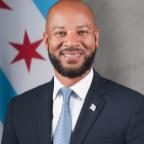 4Lamont J. Robinson: Nay
 5Desmon C. Yancy: Yea
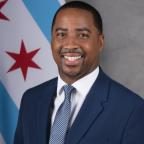 6William E. Hall: Nay
 7Gregory I. Mitchell: Yea
 8Michelle A. Harris: Yea
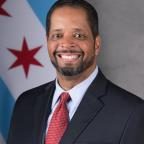 9Anthony Beale: Yea
 10Peter Chico: Yea
 11Nicole T. Lee: Yea
 12Julia M. Ramirez: Nay
 13Marty Quinn: Yea
 14Jeylú B. Gutiérrez: Nay
 15Raymond A. Lopez: Yea
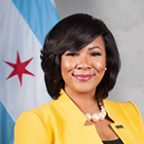 16Stephanie D. Coleman: Not voting
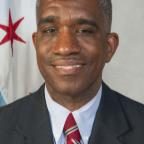 17David H. Moore: Nay
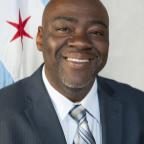 18Derrick G. Curtis: Yea
 19Matthew J. O'Shea: Yea
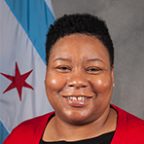 20Jeanette B. Taylor: Nay
 21Ronnie L. Mosley: Yea
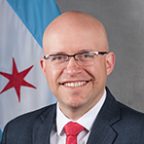 22Michael D. Rodriguez: Nay
 23Silvana Tabares: Yea
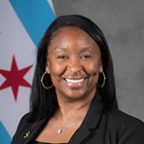 24Monique L. Scott: Yea
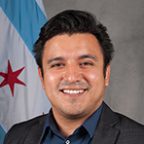 25Byron Sigcho-López: Nay
 26Jessica L. Fuentes: Nay
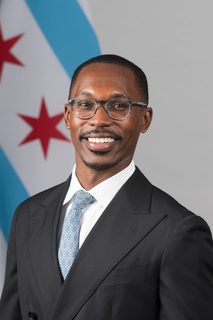 27Walter R. Burnett: Nay
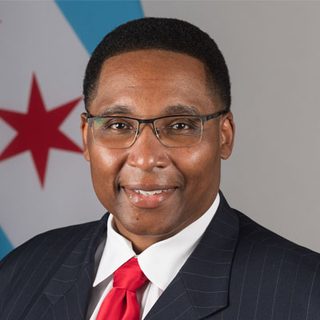 28Jason C. Ervin: Nay
 29Chris Taliaferro: Nay
 30Ruth Cruz: Yea
 31Felix Cardona Jr.: Yea
 32Scott Waguespack: Yea
 33Rossana Rodríguez Sánchez: Nay
 34William Conway: Yea
 35Anthony J. Quezada: Nay
 36Gilbert Villegas: Yea
 37Emma Mitts: Yea
 38Nicholas Sposato: Yea
 39Samantha Nugent: Yea
 40Andre Vasquez Jr.: Not voting
 41Anthony V. Napolitano: Yea
 42Brendan Reilly: Yea
 43Timothy R. Knudsen: Yea
 44Bennett R. Lawson: Yea
 45James M. Gardiner: Yea
 46Angela Clay: Nay
 47Matthew J. Martin: Nay
 48Leni Manaa-Hoppenworth: Nay
 49Maria E. Hadden: Nay
 50Debra L. Silverstein: Yea
SO2025-0021719: the roll call, the timeline and the documents
Related stories from the hearing. The CFO's estimate of about $190 million in interest on settlement bonds; the fight over the $75 million from the parking meter sale; and the police positions the budget keeps frozen.
What's next
Department hearings run through Nov. 10. Officials agreed to answer many members' requests in writing through the committee chair. The Council's public hearing on the budget is Dec. 8, and a budget must pass by Dec. 31.
Sources: Chicago Politics: Oct. 26 hearing transcript (full text).