

Altgeld Gardens Shop Building named a Chicago Landmark, memorial wall and all
The City Council designated the 1945 Keck and Keck shop building in Riverdale on Sept. 23, 50 to 0, while letting an approved rehabilitation go ahead.
The Shop Building at Altgeld Gardens, 13100 S. Ellis Ave., is now a Chicago Landmark. The City Council passed the designation, O2026-0027058, on Sept. 23 by a vote of 50 to 0, as part of the report of the Committee on Zoning, Landmarks and Building Standards, with no debate. The designation protects every outside wall and roofline of the building and, by name, the memorial wall on the north side of its covered breezeway, where residents have painted the names of neighbors who died.
The building is in the 10th Ward, represented by Ald. Peter Chico, in the Riverdale community area.
What is the Shop Building?
Altgeld Gardens was developed by the Chicago Housing Authority and completed in 1945, during World War II, to house Black defense workers and their families in a dense industrial area. It was designed as a city within itself, with housing and community facilities, and the Shop Building was its commercial center, with a grocery, drug store, tailor shop, doctor's office and beauty parlor. Unlike the rest of the development, the commercial buildings were meant to be privately built and owned. The Thaddeus Stevens Land Trust filed for the permit on April 6, 1945, listing the cost at $80,000, and the building was finished by the end of October that year.
Its architect was George Fred Keck of the firm known as Keck and Keck. The ordinance calls the Shop Building an early and unique example of modernist commercial architecture in Chicago: one story, a curved crescent-shaped footprint, flat unadorned walls, large expanses of glass and a swooping concrete canopy, with storefronts facing south and placed for passive solar heating.
Why is it historic?
The ordinance's findings tell three stories.
From 1945 to 1951 the building housed the Altgeld Gardens Consumer Co-operative, a nonprofit grocery jointly owned and run by residents. In a community of about 7,000 people, it had become by 1947 the largest store of its kind in the country.
Since the late 1960s, residents have known the building as the Up Top and used its breezeway as a place of remembrance. After 17-year-old Sterling Jones, known as Pinky, a member of the Black Panther Party, was shot and killed at Altgeld in December 1969, his name was painted on the breezeway's north wall alongside a mural of Malcolm X. Residents have since added hundreds of names and messages to lost loved ones.
In the last decades of the 20th century the building held the offices of People for Community Recovery, the environmental justice group that Altgeld resident Hazel Johnson, who lived from 1935 to 2011, founded in 1979. The group documented environmental problems at Altgeld, fought landfill and hazardous waste expansion on the Southeast Side, and brought job training to the community. The ordinance credits Johnson's activism with helping lead to the EPA's Office of Environmental Justice and the National Environmental Justice Advisory Council.
The Commission on Chicago Landmarks found the building meets five landmark criteria, numbers 1, 3, 4, 5 and 7 in the Municipal Code, and recommended designation on July 9, 2026.
What does the designation allow and restrict?
The protected features are all exterior elevations of the building, including rooflines, and the memorial wall on the north wall of the covered breezeway. Exterior work on those now goes through the landmark permit review in the Municipal Code.
One project is already cleared. On April 2, 2026, the Commission's Permit Review Committee approved, with conditions, a pre-permit submission for the exterior and interior rehabilitation of the existing one-story masonry building and construction of a new, visible side addition. The ordinance says that scope of work shall be permitted notwithstanding the protected features. The ordinance also directs the Commission to create a plaque identifying the building as a Chicago Landmark. The record does not say who is carrying out the rehabilitation or when it will finish, and the ordinance contains no City money.
How did the Council handle it?
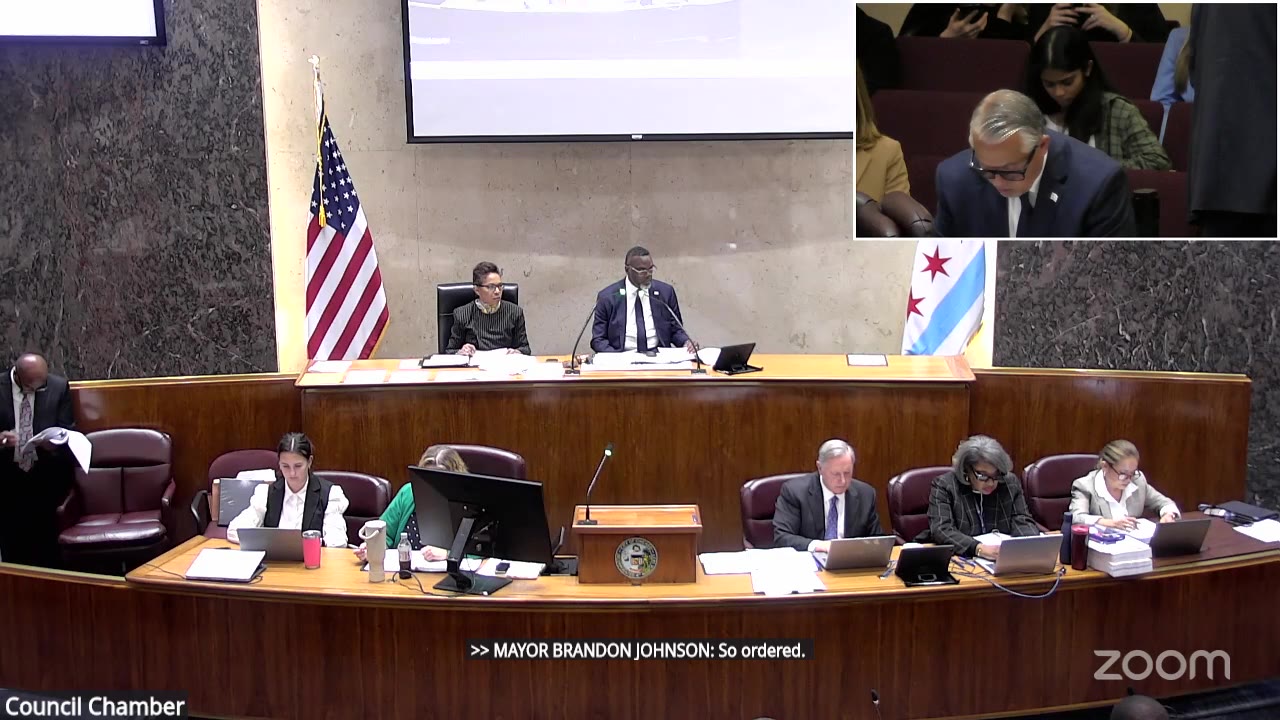
The ordinance came to the Council on July 15 as a transmittal from the Commission; the Zoning committee recommended it on Sept. 22. On Sept. 23, committee chair Ald. Gilbert Villegas (36th Ward) read the Altgeld Gardens and Bryn Mawr Avenue designations together and moved them by the same motion the Council had used earlier in the meeting. Hearing no objection, the chair declared them so ordered. No alderperson spoke on it, and Chico did not address it on the floor. All 50 alderpersons are recorded as voting yes; the Clerk notes an unsuccessful motion to reconsider by Ald. Gregory Mitchell (7th Ward).
How each ward voted
50 yea · Sep 23, 2026 · Passed
 1Daniel La Spata: Yea
 2Brian Hopkins: Yea
 3Pat Dowell: Yea
 4Lamont J. Robinson: Yea
 5Desmon C. Yancy: Yea
 6William E. Hall: Yea
 7Gregory I. Mitchell: Yea
 8Michelle A. Harris: Yea
 9Anthony Beale: Yea
 10Peter Chico: Yea
 11Nicole T. Lee: Yea
 12Julia M. Ramirez: Yea
 13Marty Quinn: Yea
 14Jeylú B. Gutiérrez: Yea
 15Raymond A. Lopez: Yea
 16Stephanie D. Coleman: Yea
 17David H. Moore: Yea
 18Derrick G. Curtis: Yea
 19Matthew J. O'Shea: Yea
 20Jeanette B. Taylor: Yea
 21Ronnie L. Mosley: Yea
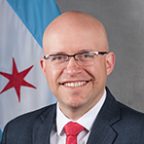 22Michael D. Rodriguez: Yea
 23Silvana Tabares: Yea
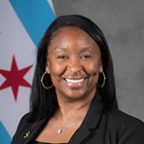 24Monique L. Scott: Yea
 25Byron Sigcho-López: Yea
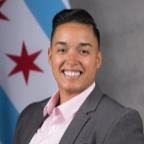 26Jessica L. Fuentes: Yea
 27Walter R. Burnett: Yea
 28Jason C. Ervin: Yea
 29Chris Taliaferro: Yea
 30Ruth Cruz: Yea
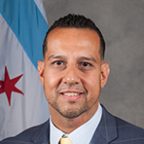 31Felix Cardona Jr.: Yea
 32Scott Waguespack: Yea
 33Rossana Rodríguez Sánchez: Yea
 34William Conway: Yea
 35Anthony J. Quezada: Yea
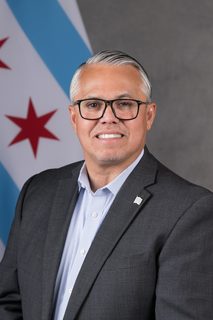 36Gilbert Villegas: Yea
 37Emma Mitts: Yea
 38Nicholas Sposato: Yea
 39Samantha Nugent: Yea
 40Andre Vasquez Jr.: Yea
 41Anthony V. Napolitano: Yea
 42Brendan Reilly: Yea
 43Timothy R. Knudsen: Yea
 44Bennett R. Lawson: Yea
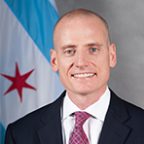 45James M. Gardiner: Yea
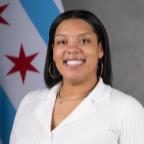 46Angela Clay: Yea
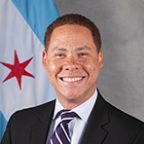 47Matthew J. Martin: Yea
 48Leni Manaa-Hoppenworth: Yea
 49Maria E. Hadden: Yea
 50Debra L. Silverstein: Yea
O2026-0027058: the roll call, the timeline and the documents
What it means on your block
The Up Top is now protected the way the City protects its most important buildings. Its curved walls, its canopy and, above all, the wall of names in the breezeway cannot be altered without landmark review. The rehabilitation already approved in April can go ahead, including the side addition, under the conditions the Permit Review Committee set. A plaque will mark the building.
What the designation does not do is fund anything or reopen the stores. The record is silent on what the rehabilitated building will hold. You can follow the ordinance, the Commission's recommendation and the findings on the ordinance's page. Chico's 10th Ward office is the place to ask about the rehabilitation's schedule and what will go inside when it is done.